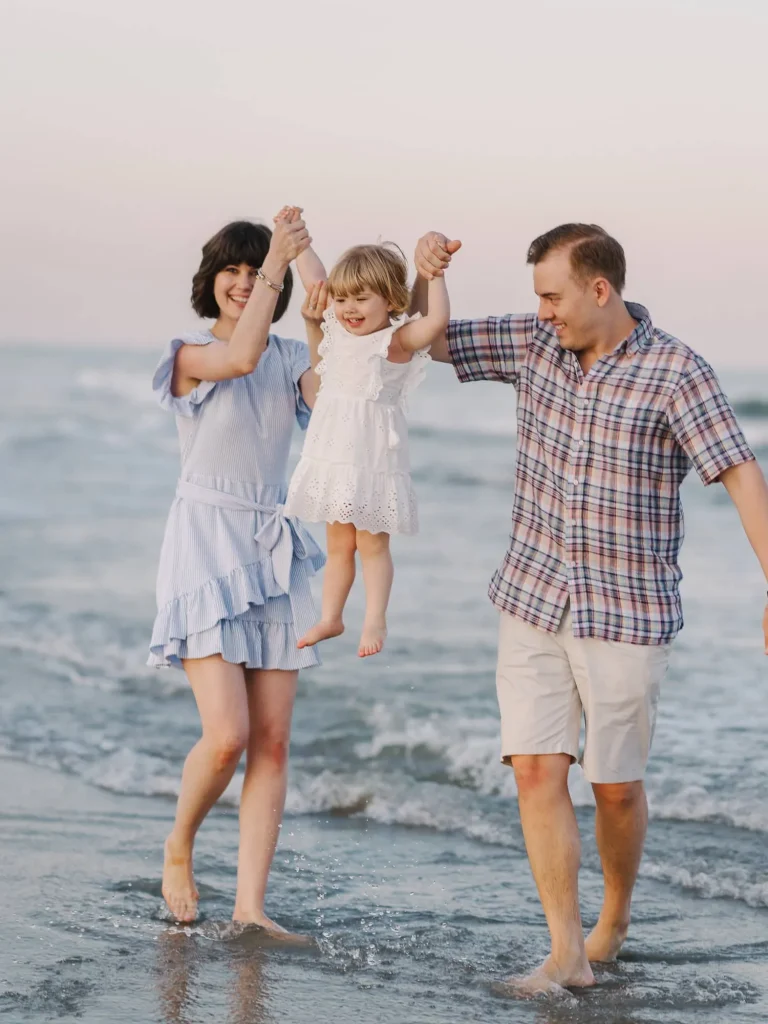
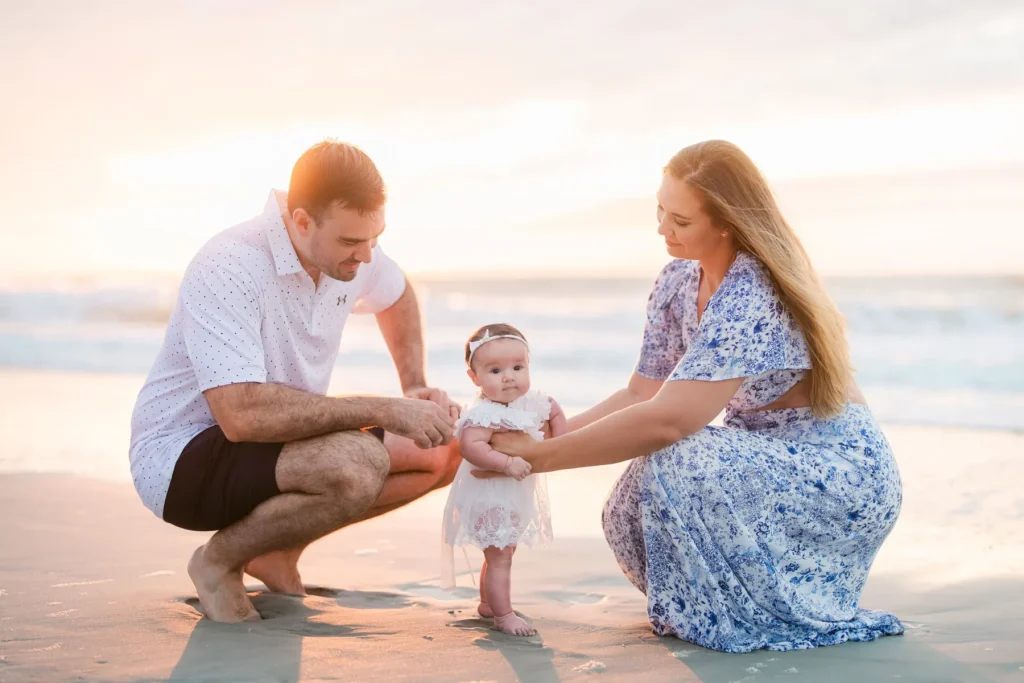
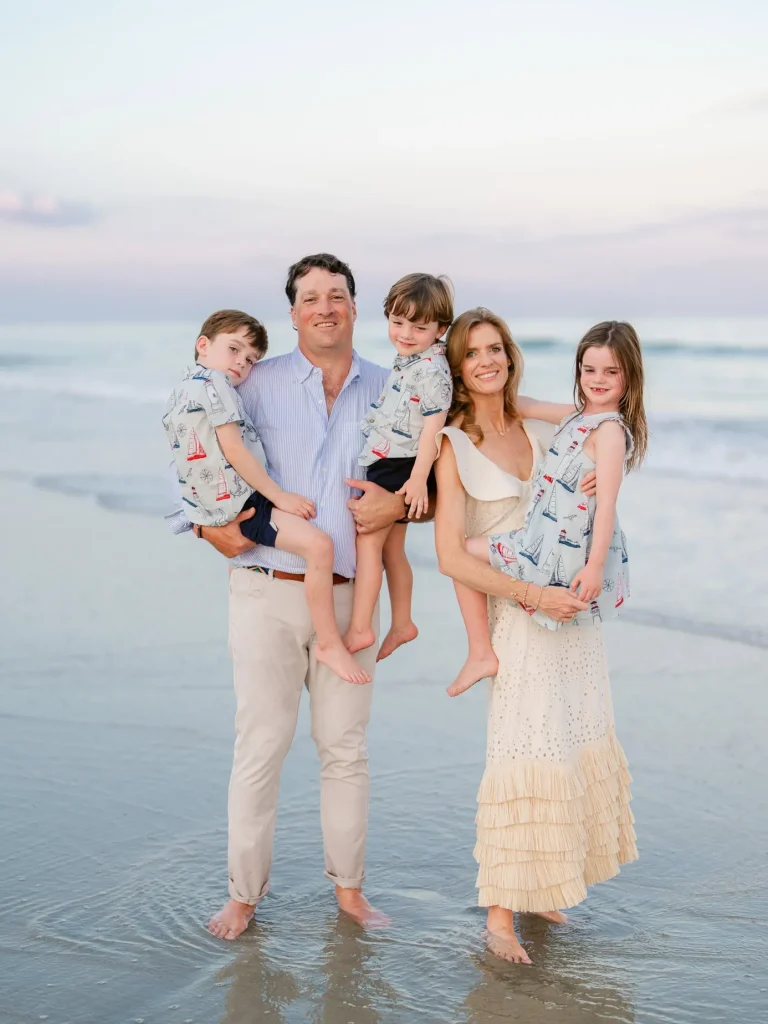
What to wear for Beach family Photos: The complete outfit guide
Planning beach family photos? If you’re booking with a coastal photographer, start with our complete guide to family photographer selection and booking at our family photography page. This guide focuses on what to wear once you’ve booked your session.
Choosing the right outfits can make your beach portraits look cohesive, natural, and effortless. Soft coastal light, warm sand tones, and the ocean backdrop all influence which colors and fabrics photograph best for beach sessions.
The best outfits for beach family photos focus on light colors, breathable fabrics, and coordinated tones rather than exact matching. When clothing works with the sand, sky, and ocean, your photos feel timeless instead of trendy, whether you’re shooting at sunrise on a pier, golden hour at a coastal location, or a sunset session by the water.
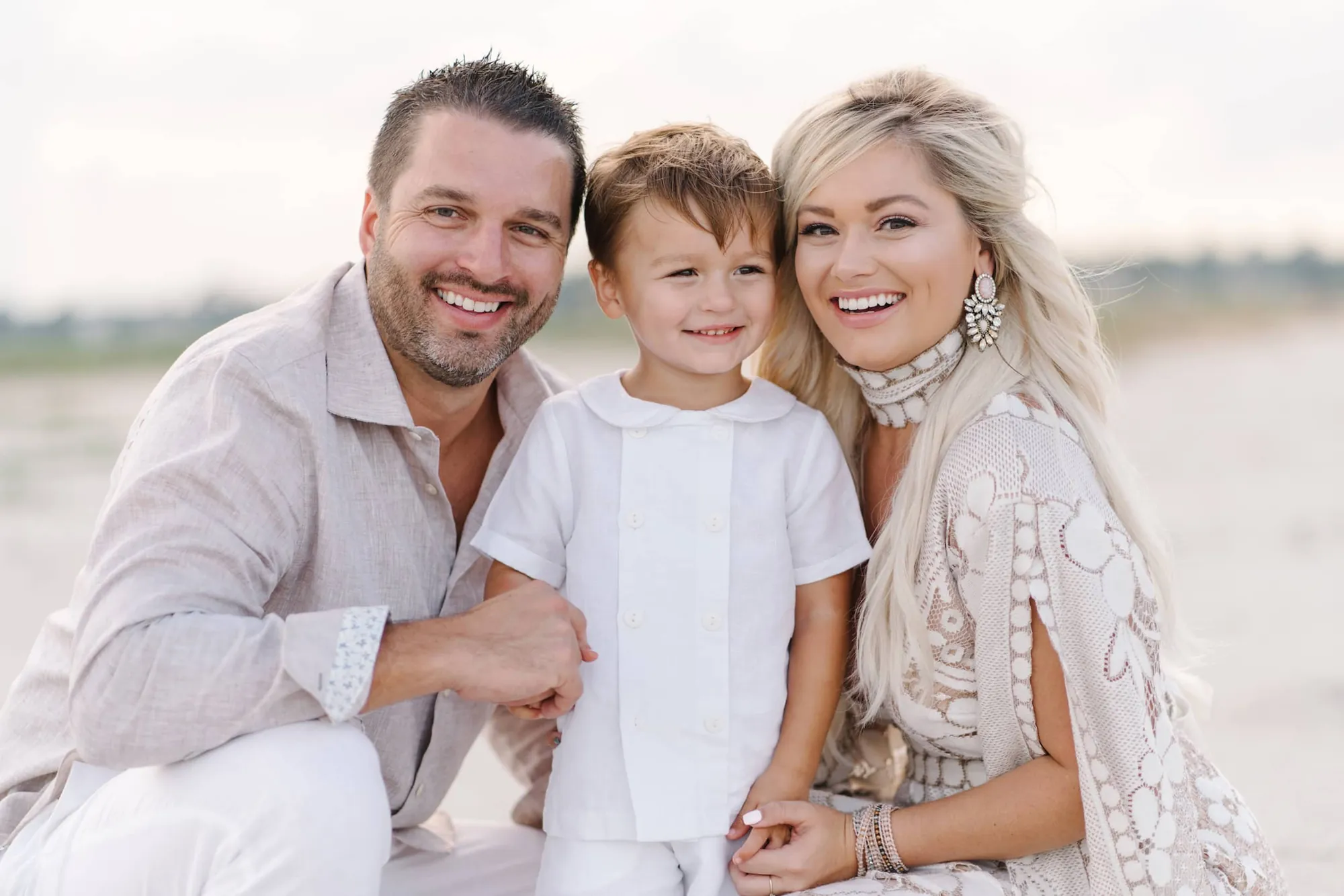
Pasha Belman Photography brings over 15 years of experience photographing families in coastal settings. We’ve seen firsthand which outfits photograph best in natural coastal light, and we’ve documented thousands of beach sessions across different times of day and locations.
Timing your session around the right light makes just as big a difference as what you wear. Golden hour and soft morning light are ideal for family beach portraits because they’re flattering and create that warm, glowing look in photos.
Here is the approach we teach every family before a session. Start with one person, usually Mom, and choose her outfit first. Pull two or three colors from that outfit, then dress everyone else in the same family of tones. Build Dad around Mom, and dress the kids last. This one habit does more for a cohesive gallery than any single color choice, and it is the fastest way to get a group that looks planned without looking matched.
Jump to a Section
The Framework
- What Should You Wear for Beach Family Portraits?
- Why Outfit Choices Matter for Beach Family Sessions
- Choosing the Best Color Palettes for Beach Family Sessions
Color Palette Ideas
- Why All White Outfits Work So Well for Beach Photos
- White and Gray Family Photo Outfits
- Tan and White Family Photo Outfits
- Navy and Tan Family Photo Outfits
- Blue and White Family Photo Outfits
- Blush, Tan, and White Outfits
- Soft Pink and White Outfit Ideas
- Pink and Blue Family Photo Outfits
Coordinating Your Group
- How to Coordinate Family Outfits Without Looking Too Matched
- What Babies and Toddlers Should Wear
- What Teenagers Should Wear
- What Grandparents Should Wear
- Coordinating Extended Families and Large Groups
- Outfit Ideas by Family Size
Fabric, Texture, and Styling
- Best Fabrics for Beach Family Photos
- Using Texture Instead of Bold Patterns
- Layering Without Overdoing It
- What Women and Girls Should Wear
- Outfit Ideas for Men and Boys
- Shoes or Barefoot
- Jewelry and Accessories That Photograph Well
- Wind and Hair Planning
Planning Around Light and Season
Before You Go
What Should You Wear for Beach Family Portraits?
The best outfits for beach family photos are soft neutrals and light coastal colors, white, cream, tan, soft blue, and blush, worn in breathable fabrics like linen and cotton and coordinated rather than matched.
- Choose soft, neutral colors like white, cream, tan, soft blue, blush, or light gray
- Use lightweight fabrics such as linen, cotton, or flowy blends
- Coordinate colors instead of matching identical outfits
- Avoid logos, neon colors, and heavy patterns
- Go barefoot or wear simple neutral sandals
Why Outfit Choices Matter for Beach Family Sessions
Outfit choices play a major role in how family sessions look and feel. Beach environments are bright, reflective, and open, which means colors, fabrics, and fit are far more noticeable than in other locations. Clothing that feels natural and cohesive helps your family stand out without distracting from expressions and connection.
Coastal settings also introduce movement from ocean breezes, walking in the sand, and natural family interaction. Lightweight fabrics and coordinated tones photograph more naturally, creating images that feel relaxed, balanced, and timeless rather than stiff or overly styled.
- Sand and water reflect light upward onto faces
- Wind creates movement in loose or stiff fabrics
- Open backgrounds make clothing more noticeable
- Strong colors and patterns can overpower expressions
There is one point families underestimate every time. On a beach, the background is part of the portrait. In a studio the wall stays neutral and the clothing carries the frame. On the sand, the sky, water, and light are all competing for attention, so the outfits have to work with the scene instead of against it. A single loud shirt or one stark black dress will pull the eye in every wide shot, and there is no wall to hide it against.
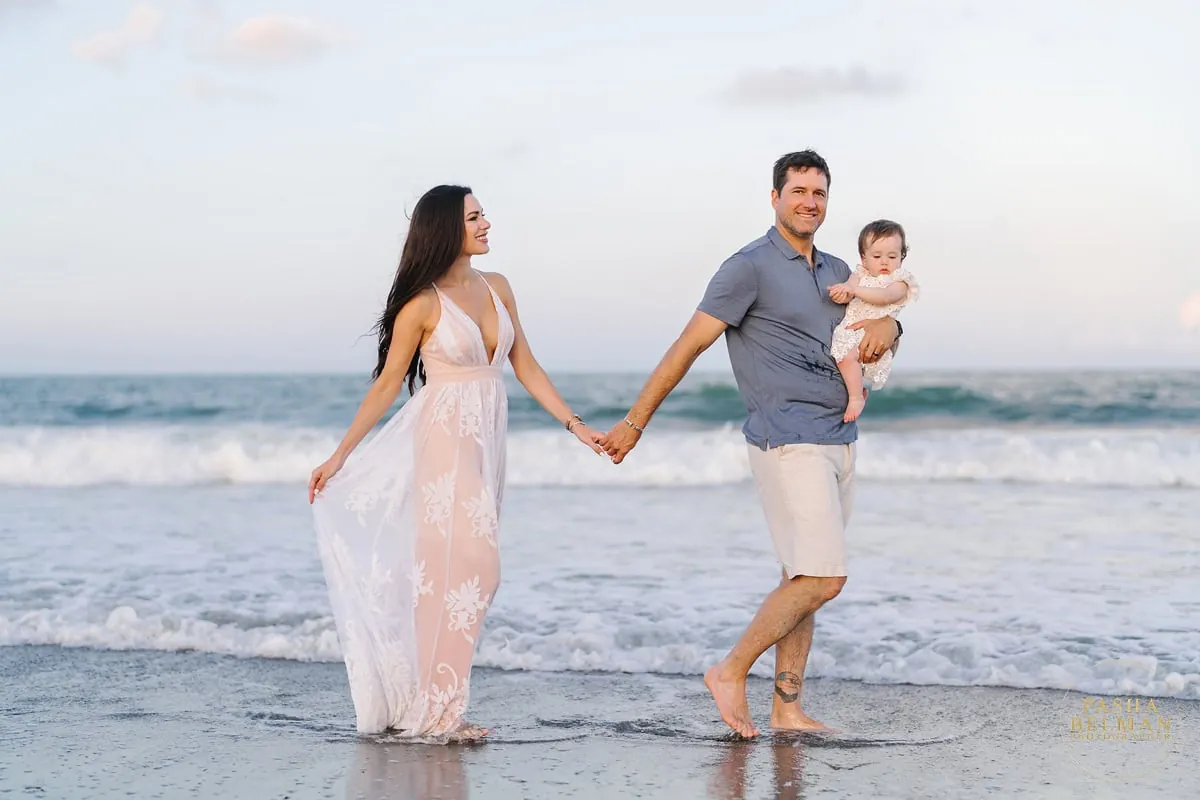
Choosing the Best Color Palettes for Beach Family Sessions
When planning outfits for beach family photography, color choice matters more than people expect. Soft, coastal tones reflect natural light gently and help keep the overall look calm, cohesive, and timeless.
Rather than dressing everyone in the same outfit, choose a coordinated color palette that works together while allowing each family member’s personality to show. This is especially important for outdoor sessions where the light changes beautifully from morning to golden hour.
Reliable color choices for beach family photography include:
- White and cream
- Light gray
- Soft blue and muted navy
- Blush and pale pink
- Pale tan and warm neutrals
These colors complement sand, sky, and ocean tones while photographing well across a wide range of skin tones at any time of day.
How Many Colors Should Your Family Wear?
Two or three colors is the sweet spot for most families. One color reads flat in photographs and blends everyone together. Four or more starts to compete with the beach itself. Pick a main color, a supporting neutral, and one accent, then spread those tones across the group so no single person is the only one wearing any color.
Build the palette around one person. Choose the outfit for whoever is hardest to dress, usually Mom, and pull everyone else from the same family of tones. This keeps the group cohesive without turning it into a uniform. When a color appears on at least two people, spread across the frame, the whole group reads balanced.
Why All White Outfits Work So Well for Beach Photos
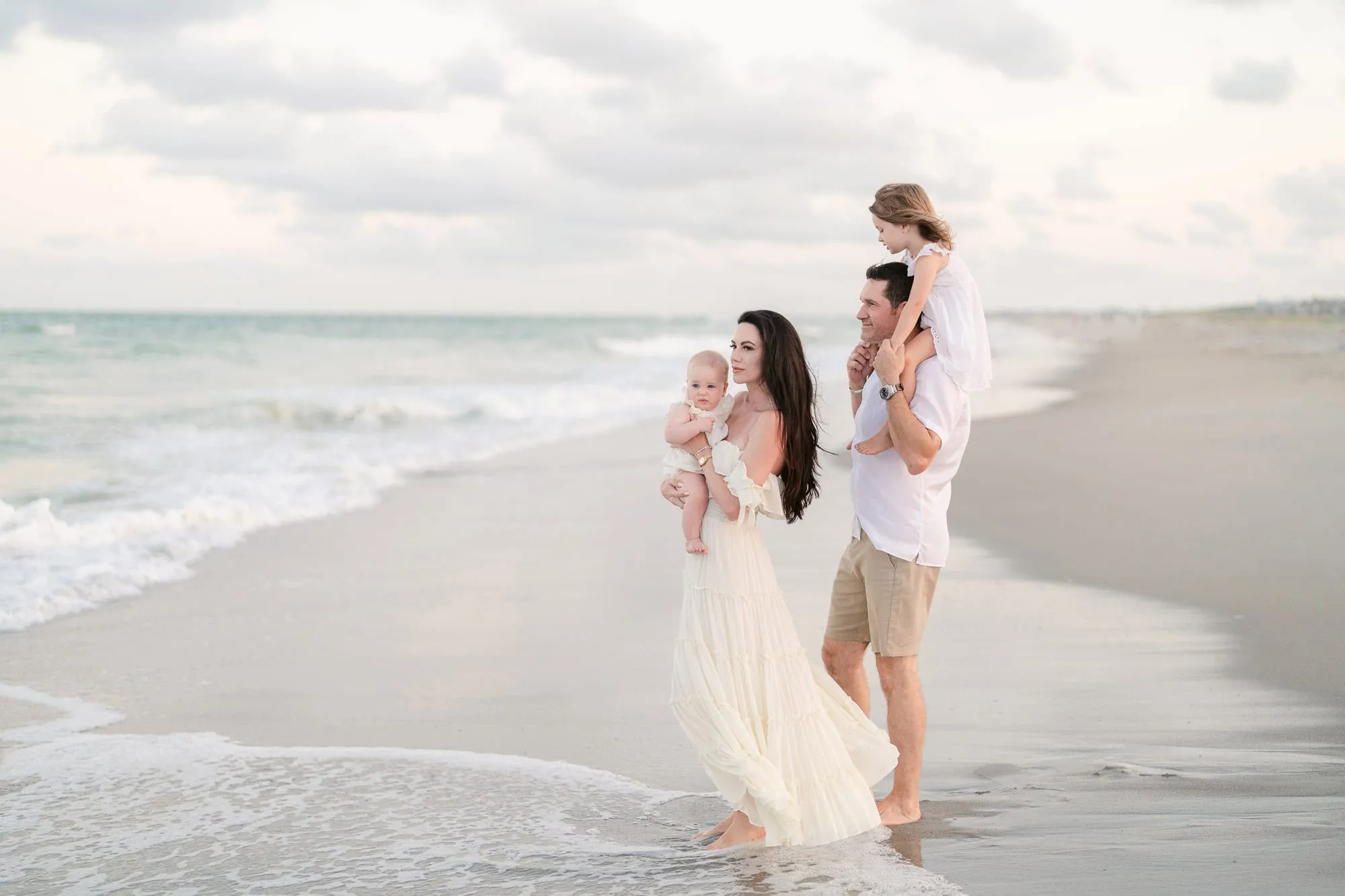
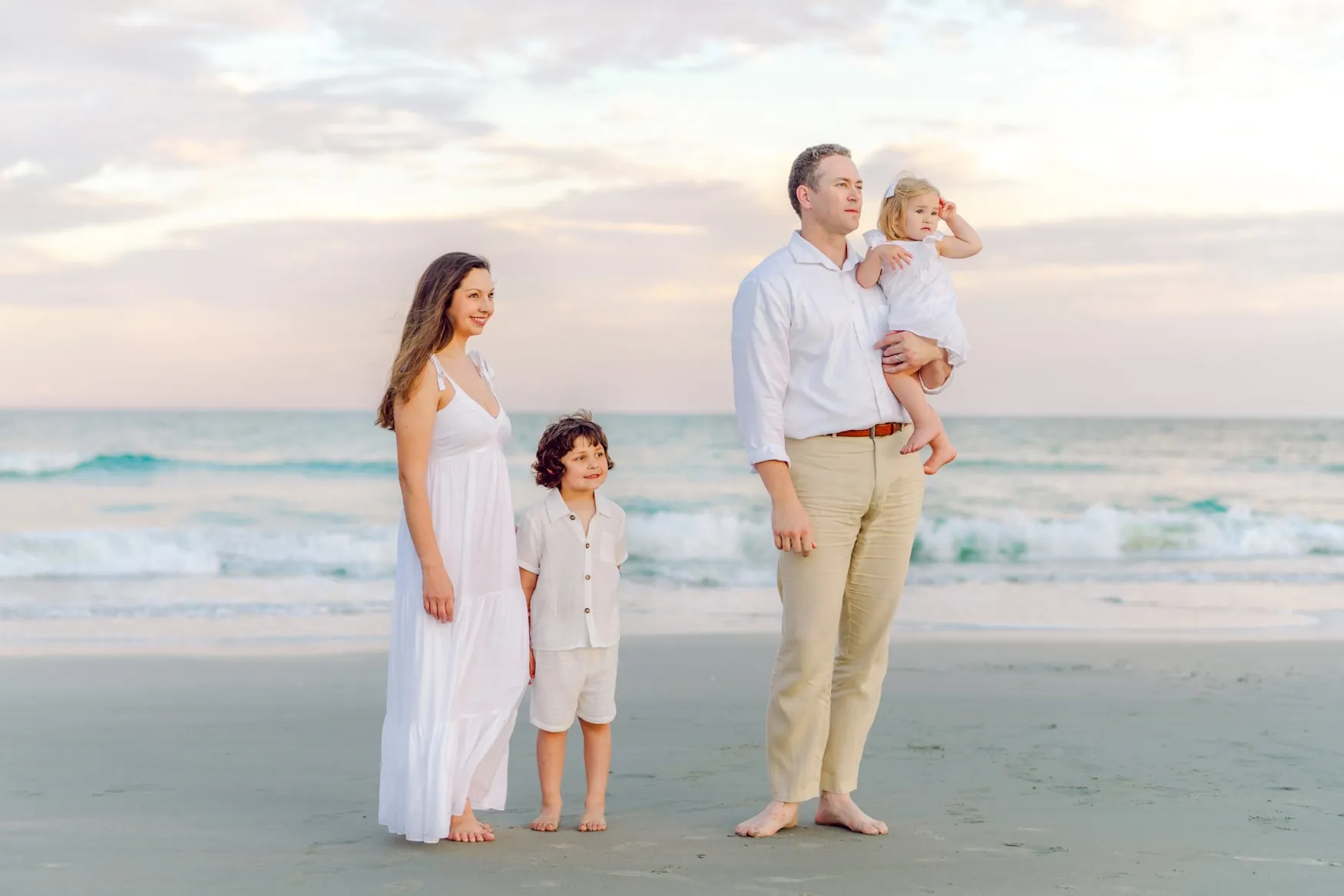
All-white outfits are one of the most timeless and popular choices for beach family photos. White reflects natural light beautifully along the coast, brightens skin tones, and creates a clean, airy look against the sand and ocean. When styled intentionally, white feels effortless and elevated rather than overly styled.
Why all-white outfits work so well for beach family photos:
- They reflect coastal light instead of absorbing it
- They keep the overall look bright and cohesive
- They photograph cleanly in both morning light and golden hour
- They allow expressions and connections to stand out
All-white works because it removes competition. Nothing pulls the eye away from faces, hands, and the way a family leans into each other. On a bright beach, that simplicity reads as intentional and clean, which is exactly why it has been our signature look for years.
The mistake with all-white is never the color. It is sameness. Five people in identical flat cotton tees photograph as a blank white shape with no depth. The fix is texture. Put different fabrics on different people so light catches each one differently and the group gains dimension.
How to Build Texture Into an All-White Palette
- Linen for natural movement and a soft, lived-in wrinkle
- Cotton gauze or muslin for a light, airy softness
- Eyelet or broderie for subtle pattern without adding color
- Waffle or ribbed knit for quiet depth on a top or dress
- A cable-knit or chunky sweater on one adult for cooler light
- Lace, crochet, or embroidery details to catch the eye up close
Mix warm and cool whites on purpose. Bright optic white next to soft ivory and cream adds quiet dimension and keeps the group from looking flat. On camera it still reads as one clean palette. White also loves soft light. At sunrise and in the last hour before sunset, white glows. Under harsh midday sun it can blow out and lose detail, which is one reason we schedule most all-white sessions for the edges of the day. Finish the look barefoot. Shoes rarely add anything to white, and bare feet in the sand keep the whole frame clean.
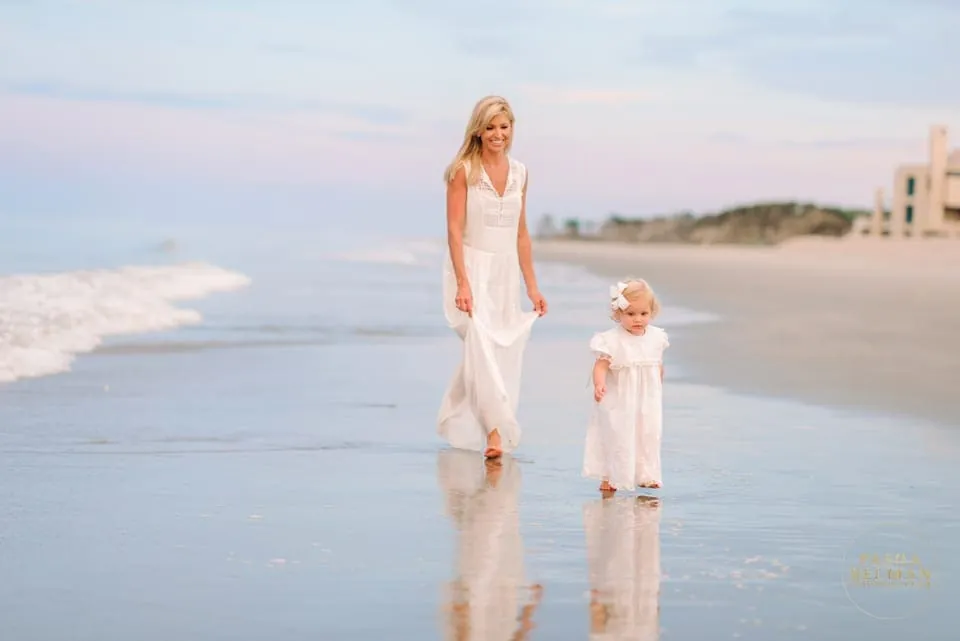
For women and girls
Flowing white maxi dresses or lightweight sundresses photograph beautifully along the shoreline, especially when fabrics move naturally in ocean breezes. Subtle details like lace, embroidery, pleating, or texture add interest without pulling focus from faces.
For men and boys
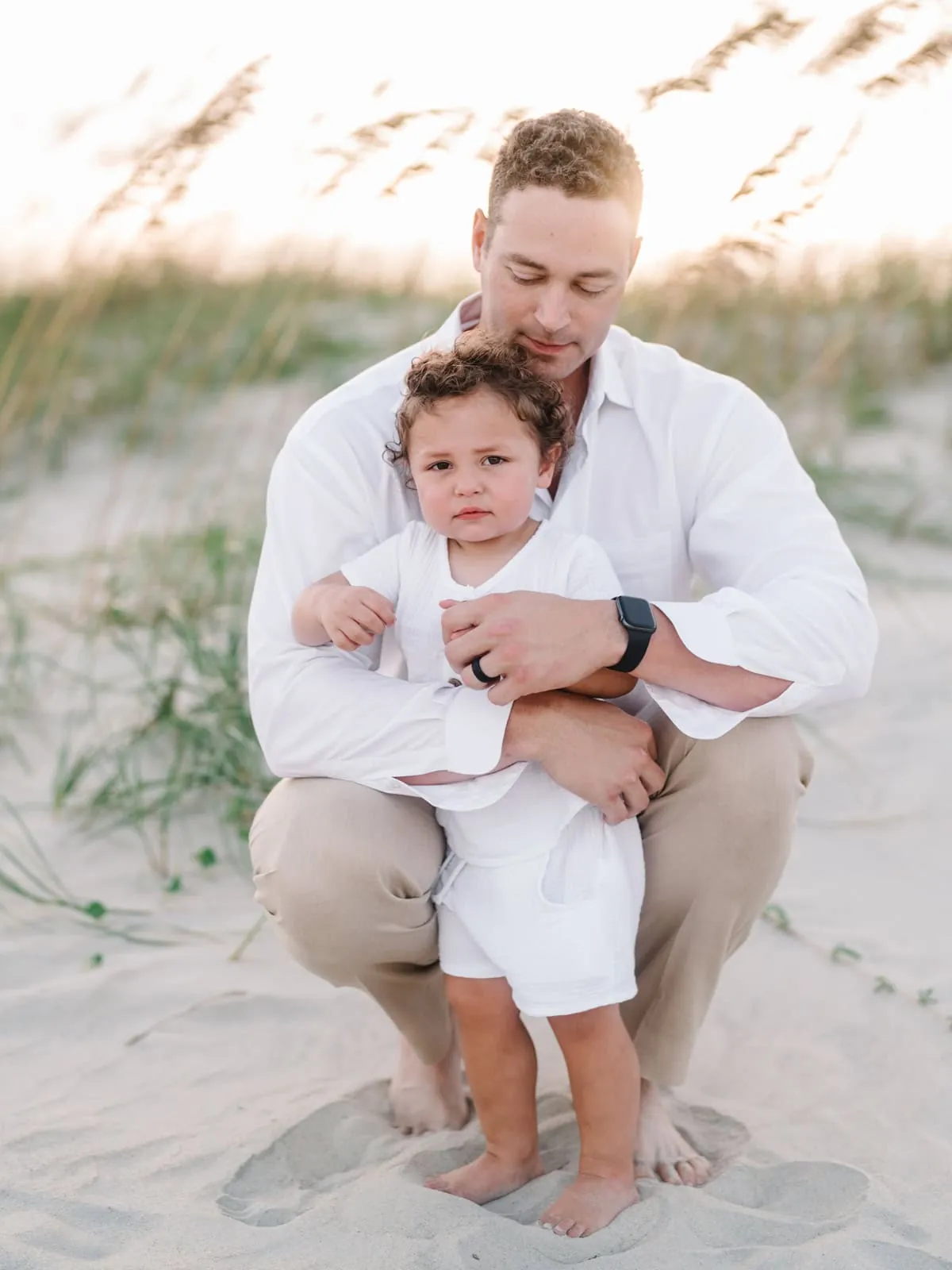
White button-down shirts or polos paired with linen, khaki, or soft denim shorts work best. Breathable fabrics like cotton and linen help everyone stay comfortable in coastal heat, which leads to more natural expressions during the session.
When everyone feels comfortable and unrestricted in what they’re wearing, genuine emotion comes through naturally, creating beach family portraits that feel relaxed, connected, and timeless.
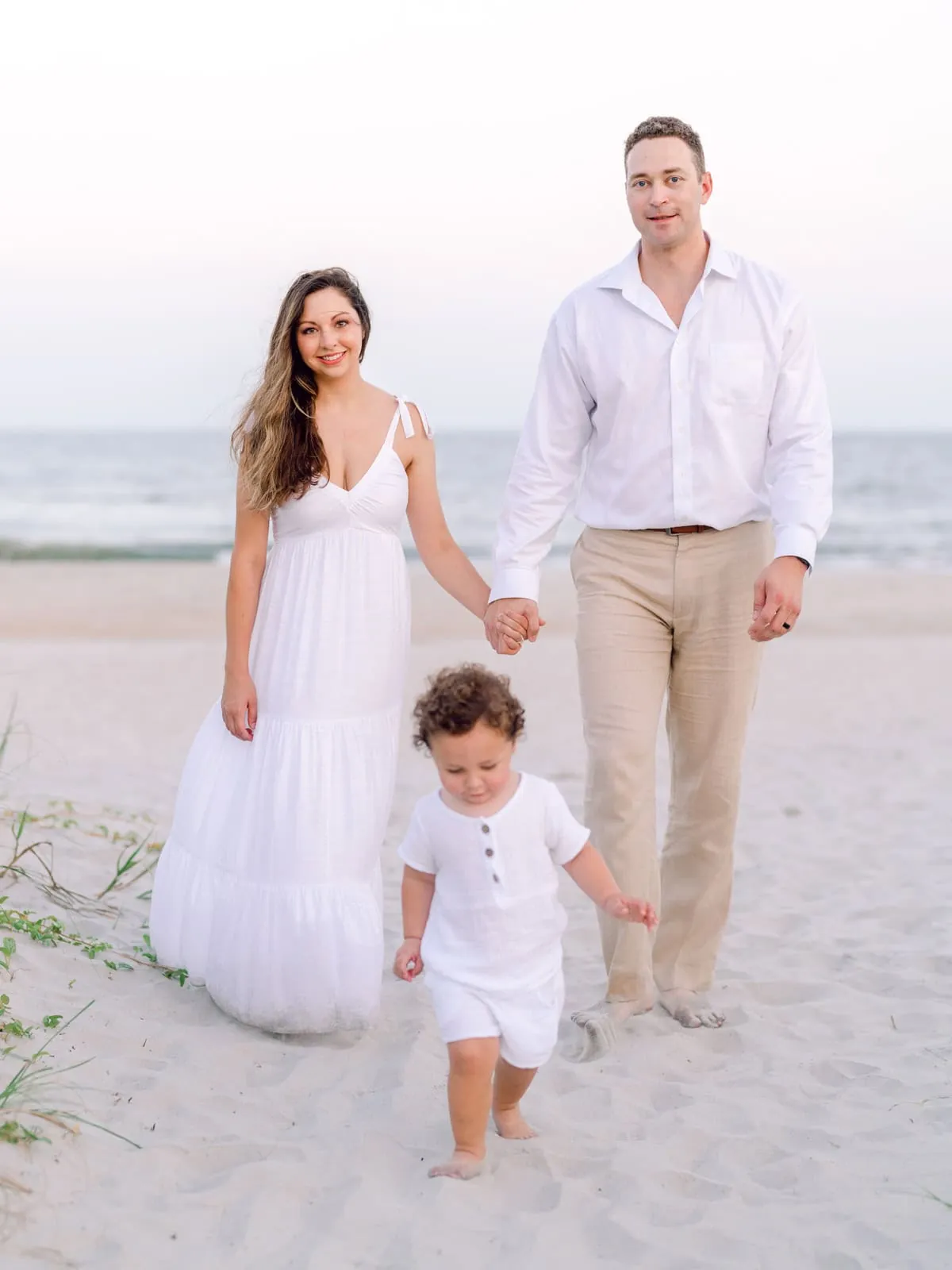
White and Gray Family Photo Outfits for Beach Sessions
White and gray create a clean, sophisticated color palette that feels both modern and timeless for beach family photos. This combination adds gentle contrast while staying neutral enough to blend naturally with sand, sky, and ocean tones.
Gray works well across a wide range of skin tones and helps ground brighter whites, making it an excellent choice for families who want a polished look without introducing bold color during their coastal beach session.
Why white and gray work for beach family photos:
- They create soft contrast without overpowering the coastal scene
- They photograph well in both bright daylight and sunset light
- They feel neutral, modern, and timeless
- They work across different ages and skin tones
Gray grounds white without adding color. It gives the eye a place to rest and keeps an all-light palette from floating. On the beach that small amount of weight reads as polished. The one thing to get right is the undertone. Warm, greige grays flatter warm and olive complexions. Cooler, bluish grays suit cooler skin. When you are unsure, a soft mid gray sits comfortably on almost everyone.
How to style white and gray outfits
Mix white tops with light gray bottoms or reverse the combination to create variation. Soft gray dresses, lightweight sweaters, or cardigans add texture and work especially well for evening sessions when temperatures cool slightly.
Reach for texture in the gray pieces. Heathered and marled knits, a soft cardigan, or a chambray-weight cotton hold light better than flat gray and add depth to the frame. One gray anchor is usually enough. Put the deepest gray on a single adult and keep everyone else in white and lighter grays so the palette stays balanced. This combination also holds up beautifully on overcast days, when soft, even light makes grays look rich instead of dull.
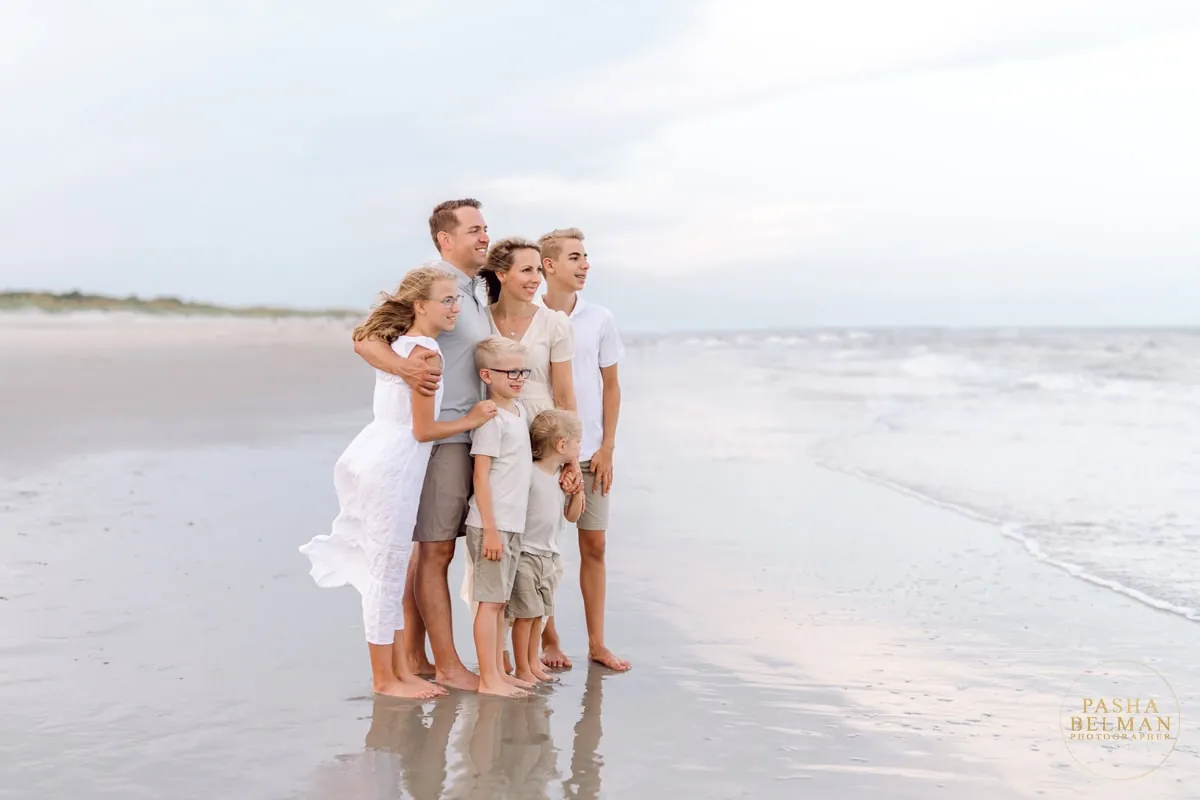
Tan and White Family Photo Outfits for Beach Sessions
Tan and white outfits offer a warm, natural look that blends seamlessly with beach sand and sunlight. This color combination feels relaxed and organic while still maintaining a clean, cohesive appearance, ideal for families who want their images to feel understated, earthy, and timeless.
Why tan and white work so well on the beach shoreline:
- They mirror the natural sand and sun tones of the beach
- They photograph warmly during golden hour
- They feel relaxed without appearing casual or messy
- They complement a wide range of skin tones
Watch the value, not just the color. Tan that sits too close to the actual sand can make a family blend into the background. Keep enough separation by mixing lighter creams with deeper camels and oatmeals, so people stand out from the scene instead of disappearing into it. The best tans for photographs run from oatmeal and sand to camel and soft taupe, and linen carries all of them well because the natural texture catches golden light.
Tan and white outfits shine during sunset sessions when warm coastal light enhances natural tones and creates a soft, glowing look in beach family photos. This is a warm-undertone palette at heart, and it comes alive in that last hour of the day.
Navy and Tan Family Photo Outfits for Beach Sessions
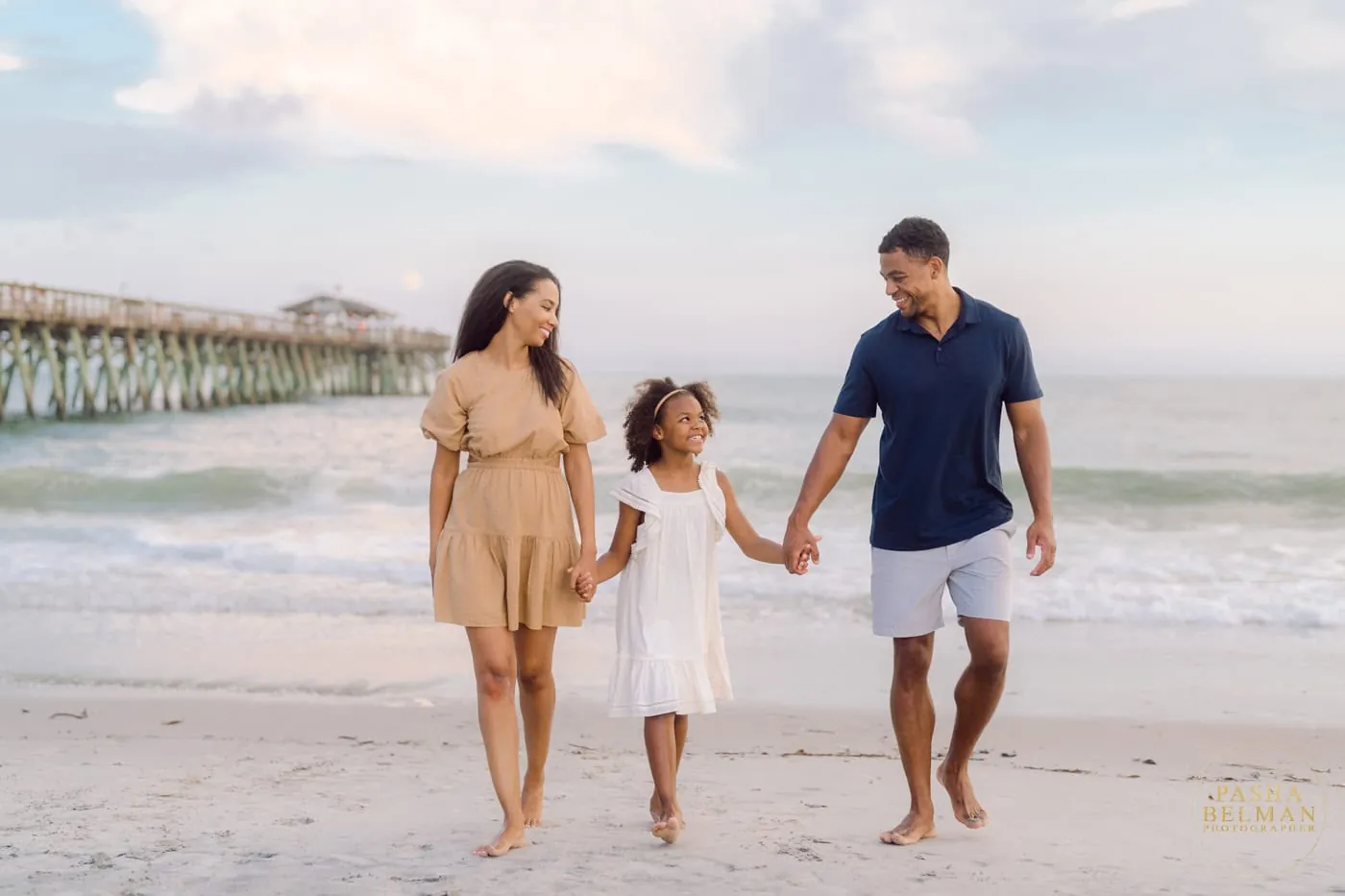
Navy and tan is a classic coastal color combination that adds depth and contrast while still feeling natural on the beach shoreline. Navy brings structure and richness, while tan keeps the overall look grounded and beach-appropriate.
This palette works especially well for families who want a slightly more polished look for their beach session without drifting into anything formal or stiff.
Why navy and tan work for beach family photos:
- Navy adds contrast without overpowering the coastal scene
- Tan softens darker tones and keeps the look beach-friendly
- The combination photographs beautifully at sunset and golden hour
- It feels timeless and works across all ages
Use navy as a single anchor. One or two navy pieces spread across the group is plenty. When everyone wears navy, the palette turns heavy and starts to feel like a uniform, and a wall of dark color punches a hole in an otherwise light beach frame. Balance a navy top on Dad with tan and cream on everyone else so the depth stays in one place and the rest of the group stays soft.
Keep the navy soft in weight. Light linen, washed cotton, and chambray hold the color without the stiffness of dress clothes, which keeps the whole look beach appropriate. When styled with light fabrics and simple silhouettes, navy and tan create beach family photos that feel balanced and effortlessly refined. For a lighter, warmer take on this same idea, our guide to blue and tan family beach outfits shows how softer blues shift the palette more relaxed.
Blue and White Family Photo Outfits for Beach Sessions
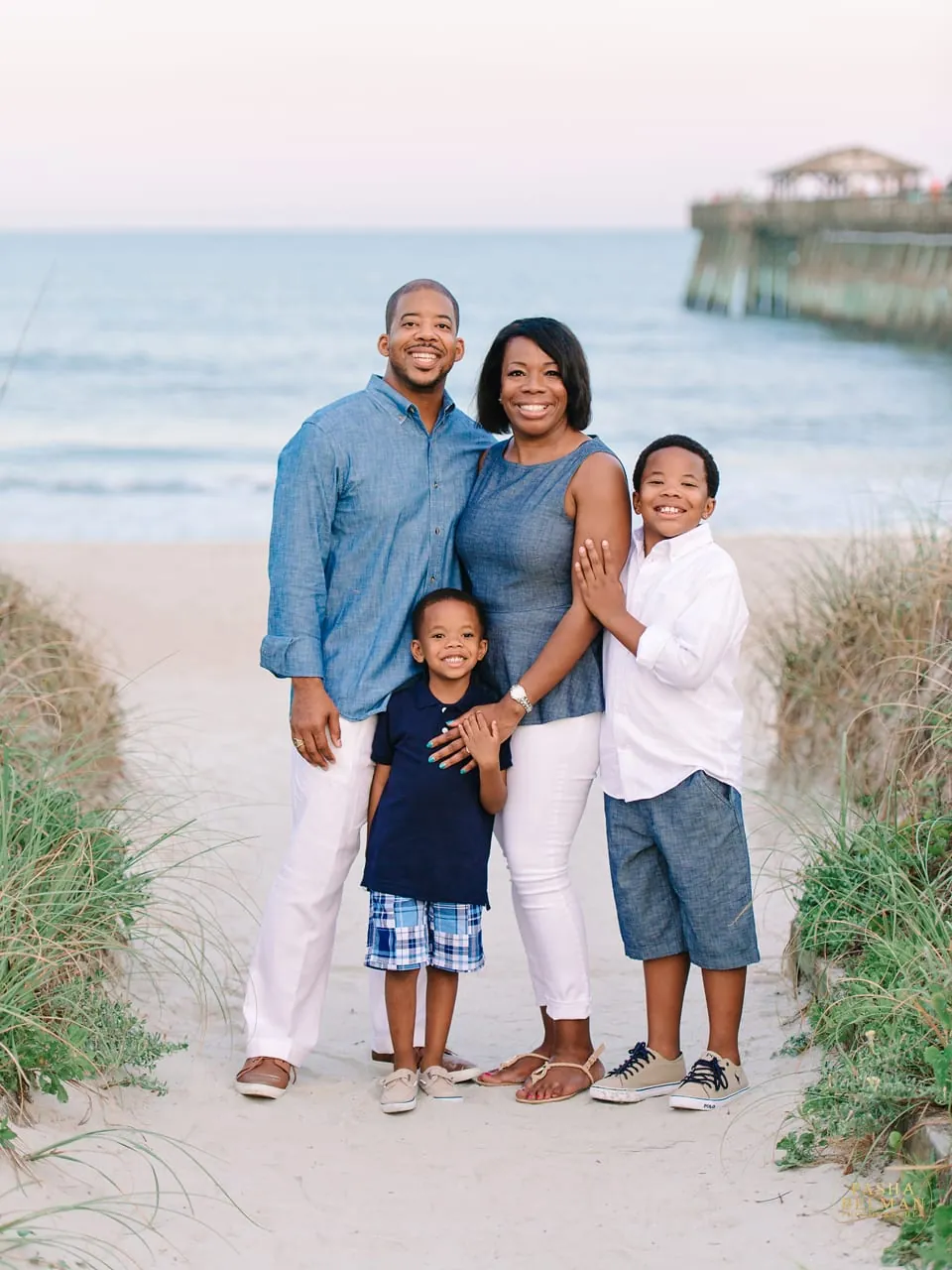
Blue and white is one of the most popular and reliable color combinations for beach family photos. These tones naturally echo the colors of the ocean and sky, creating a calm, coastal look that feels light, balanced, and timeless.
Why blue and white work for beach family photos:
- They reflect the natural colors of the ocean and sky
- Lighter blues feel softer and more relaxed than deep navy
- The palette photographs cleanly in bright sun and soft sunset light
- It works well for both candid moments and posed portraits
Best shades of blue for beach photos:
- Light blue
- Dusty blue
- Muted navy
- Soft denim blue
The trick with blue and white is range. Pull from chambray, dusty blue, powder, and soft denim instead of one flat blue, and the palette gains depth. Avoid the matchy nautical look. Everyone in the same bright blue with white stripes reads like a theme. Spread a few different blues across the family and let white carry the rest of the group.
Denim earns its place here as texture. A chambray shirt on Dad or a soft denim jacket on an older child adds weave and weight that flat cotton cannot. For a deeper look at pairing darker blues with crisp white, see our navy and white outfit ideas.
Blush, Tan, and White Outfits for Beach Family Photos
Blush, tan, and white create a soft, warm color palette that feels light and natural along the beach shoreline. This combination adds gentle color without overpowering the scene, making it a popular choice for families—and it works especially well for maternity sessions, mother-daughter portraits, and extended family sessions.
Why blush, tan, and white work for beach photos:
- They add warmth without a strong contrast against the sand
- Blush tones soften skin tones naturally in coastal light
- Tan grounds the palette and keeps it neutral
- White keeps the overall look light and airy
Blush adds warmth without pulling focus. Kept soft and muted, it flatters nearly every skin tone and turns golden at sunset. The failure mode is bright costume pink, which fights the sand instead of settling into it. Anchor the palette with tan and white and let blush be the accent. One or two blush pieces across the group is enough, and that distribution reads intentional and keeps larger families balanced. Choose soft fabrics for the blush pieces, since linen, gauze, and fine knits hold the color gently and move well in coastal air.
This color combination shines during golden hour sessions when warm light enhances blush tones and creates a soft, glowing look in beach family photos.
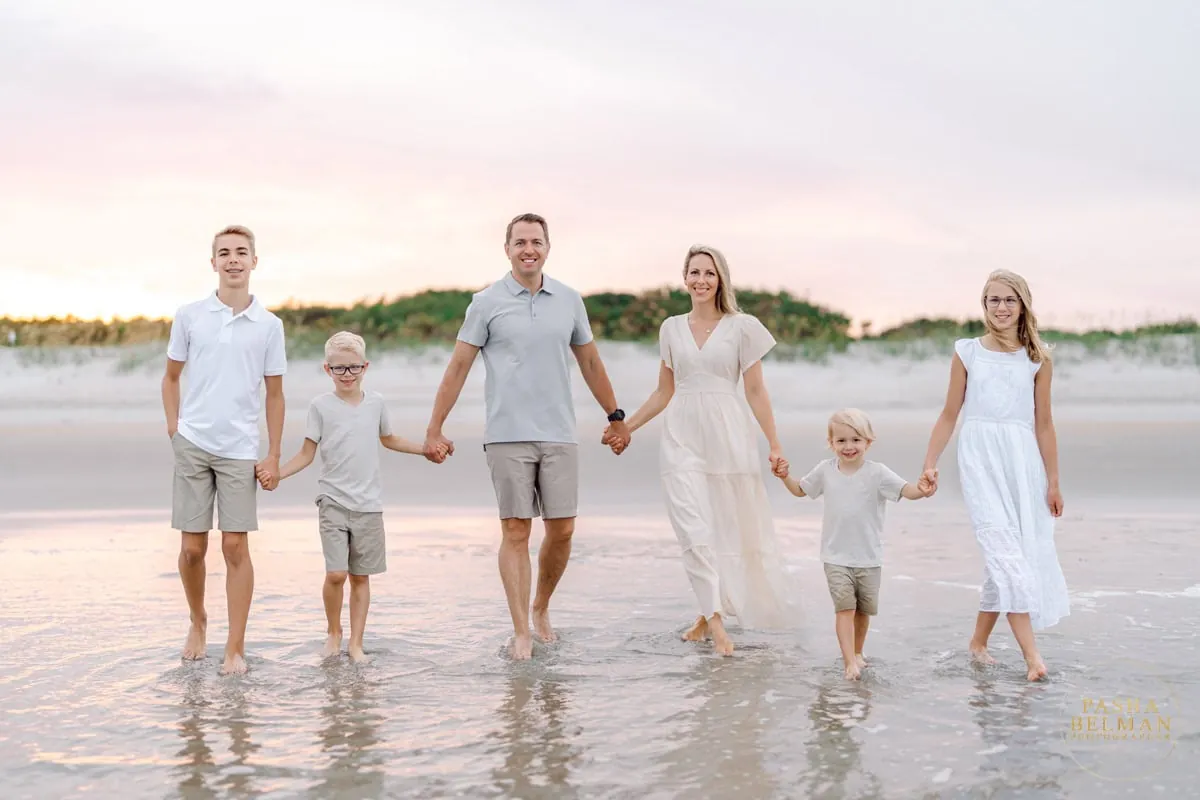
Soft Pink and White Outfit Ideas for Beach Photos
Soft pink and white create a light, cheerful look that feels fresh and timeless for beach family photos. This palette keeps images bright and warm while still feeling subtle and natural against the sand and ocean tones.
It’s an especially good option for families with young children, or anyone who wants their photos to feel joyful and soft without introducing too many colors into the scene.
Why soft pink and white work for beach family photos:
- They keep photos bright and airy in coastal light
- Pink adds warmth without overpowering skin tones
- White reflects coastal light and keeps the look clean
- The palette feels youthful and timeless
The one rule that makes or breaks this palette is the shade of pink. Bright, saturated pink is the thing to avoid. Dusty and muted pinks photograph soft and clean, while hot pink reads loud and dates a photograph quickly. Let white do most of the work and use pink as the accent, because everyone in pink turns costume-like fast. A pink dress on one child, or a pink top on Mom against white and cream, keeps the palette fresh. This combination is at its best in the soft light of early morning, when pastels look their gentlest and skin tones stay even.
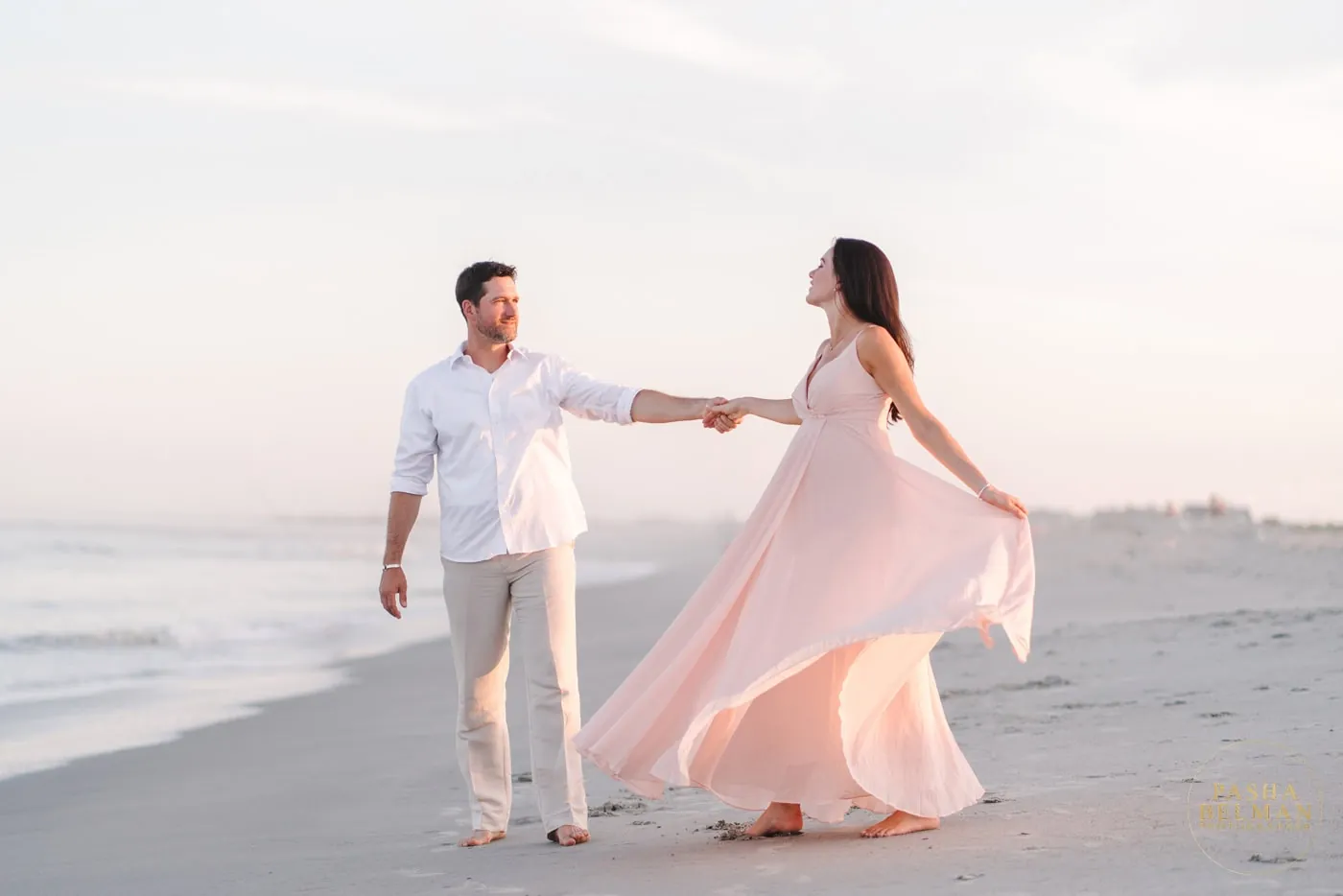
Pink and Blue Family Photo Outfits for Beach Sessions
Pink and blue create a playful yet balanced color palette that adds personality to beach family photos without feeling overwhelming. When styled in softer tones, this combination feels polished, coastal, and approachable, perfect for the relaxed atmosphere of a beach session.
Why pink and blue work for beach family photos:
- They balance warm and cool tones naturally against the coastline
- Soft shades photograph well across different skin tones
- The palette feels lively without overpowering the beach scene
- It works well for families with children of different ages
The whole palette hinges on keeping both colors muted. Dusty pink with dusty or chambray blue reads coordinated. Bright pink with bright blue reads like a party. Spread the two colors across the family instead of splitting them by gender. A blue dress, a pink romper, a chambray shirt, and a blush top mix the palette naturally and keep it from feeling assigned. This combination handles mixed ages especially well, since there is a comfortable place in it for babies, kids, and adults alike.
When kept soft and intentional, pink and blue outfits create beach family photos that feel joyful, coordinated, and timeless.
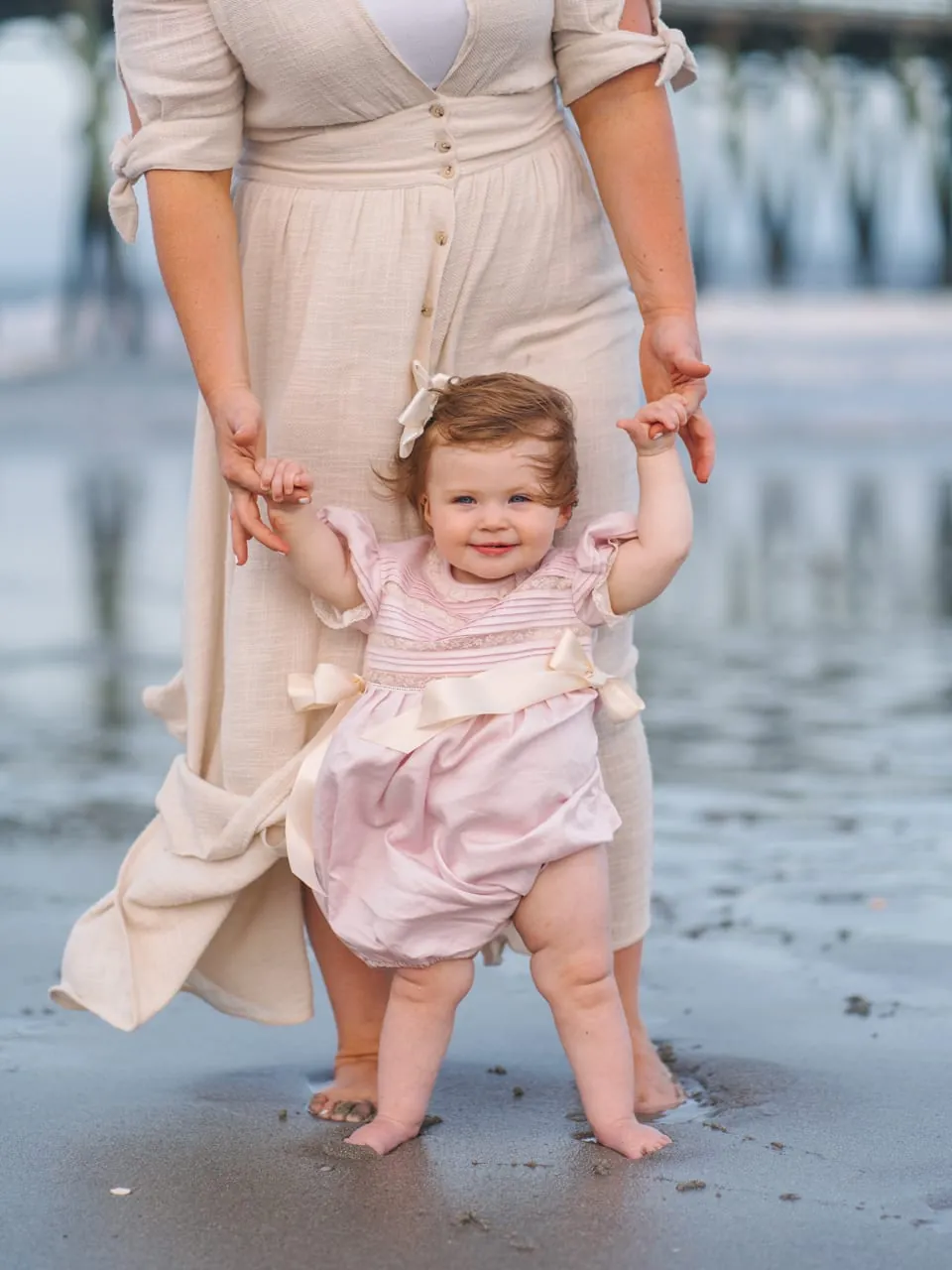
How to Coordinate Family Outfits Without Looking Too Matched
Coordinated families share a palette, not an outfit. The goal is a group that clearly belongs together while each person still looks like themselves. The families whose galleries hold up best almost never match on purpose. They coordinate, then let personalities show through fit, texture, and small differences.
Use a simple rule. Pick one main color, one neutral, and one accent, then make sure no single person is the only one wearing any color. When a color shows up on at least two people, spread across the frame, the group reads balanced. Vary the fabrics even when the colors repeat. Two people in cream look far better in linen and knit than in identical cotton. Texture is what separates coordinated from matching.
Give each person one clear job in the palette. One anchor outfit can carry the deepest or richest tone, and everyone else supports it in lighter versions of the same family of colors. Build the group in order: Mom first, Dad around her, then the kids. Dress the hardest person to shop for first and the rest falls into place quickly.
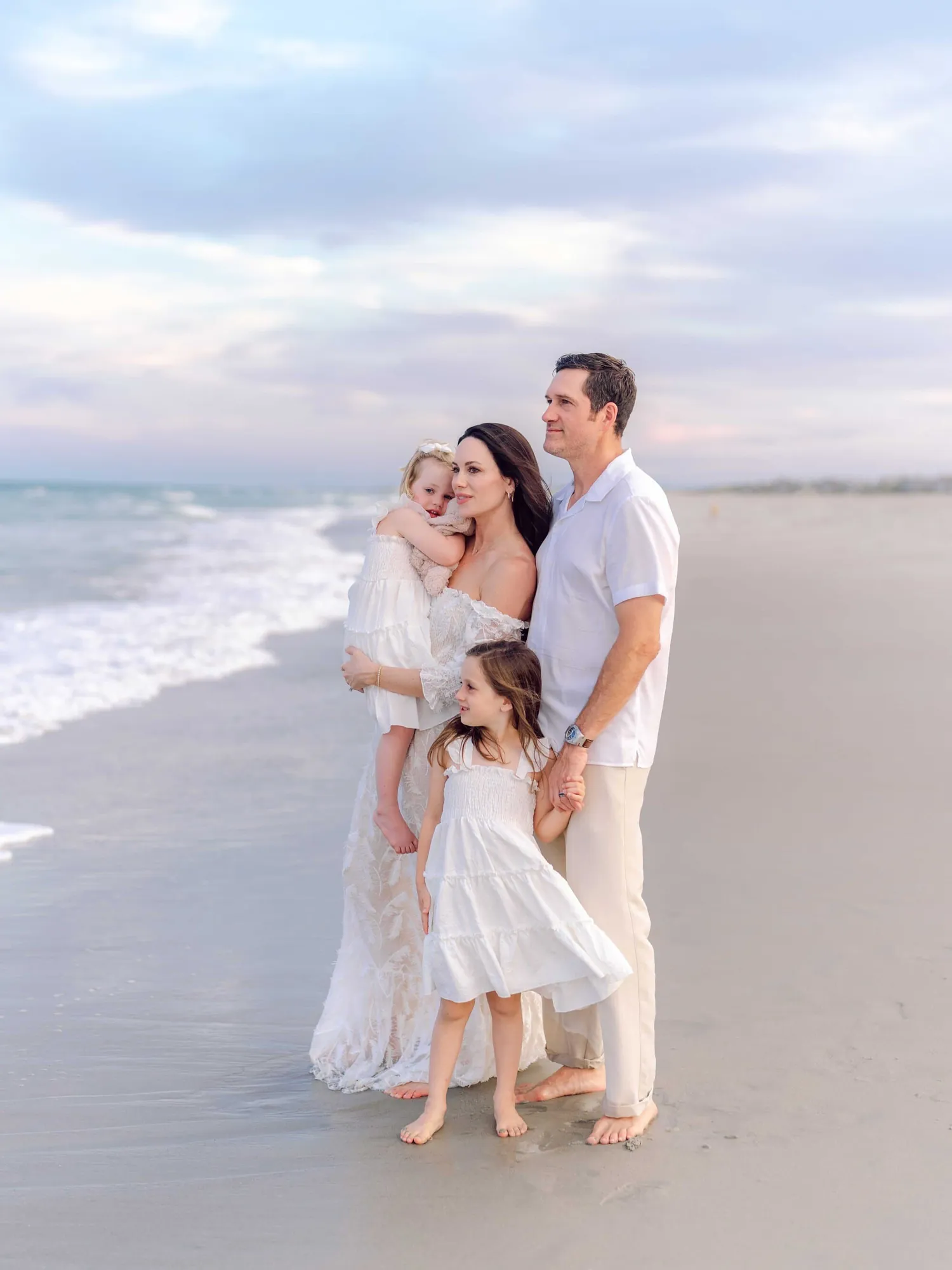
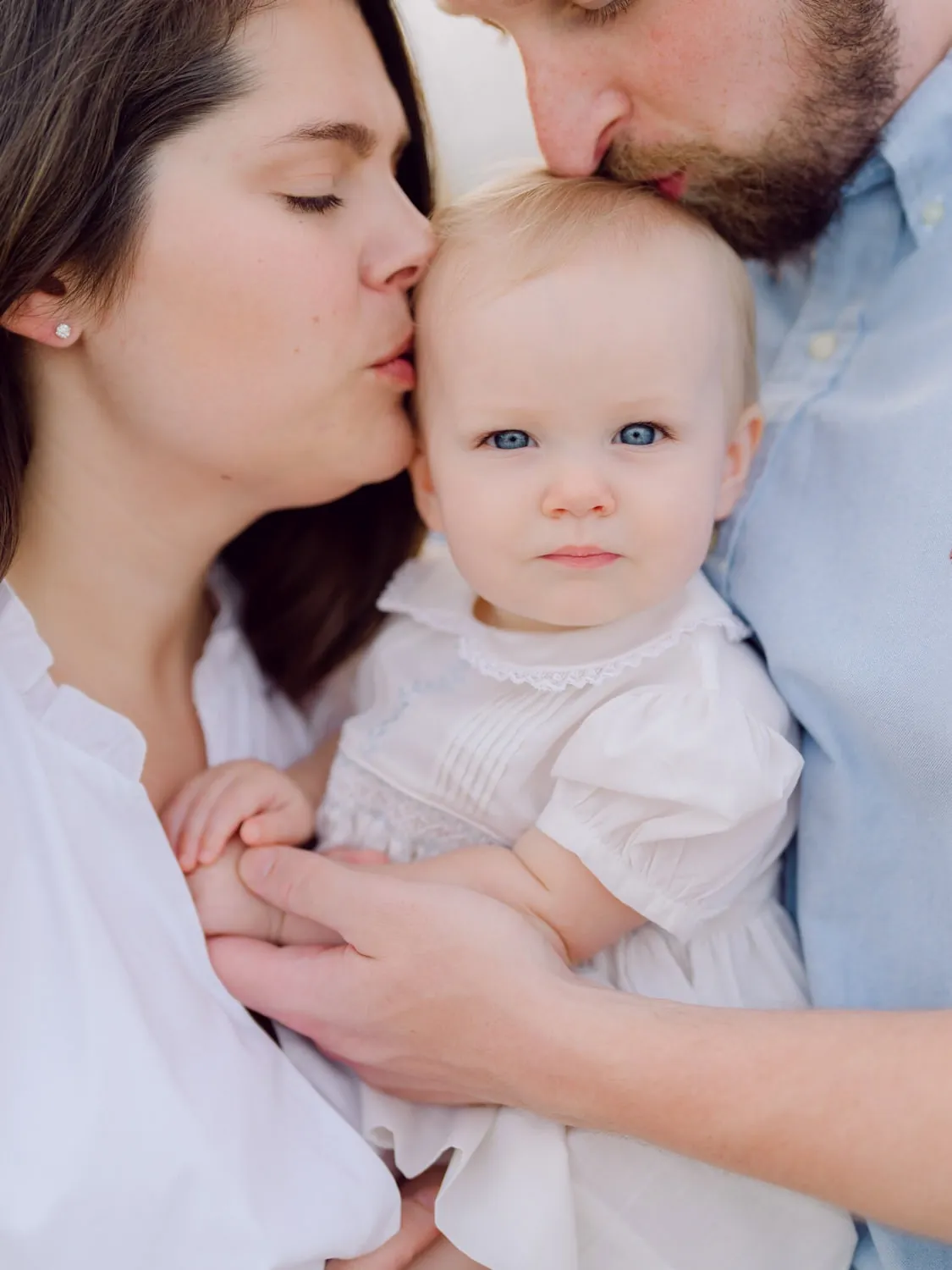
What Babies and Toddlers Should Wear for Beach Photos
Dress babies and toddlers for comfort first, because a comfortable child gives you real photos and a miserable one ends the session early. Everything else is secondary to keeping them happy on the sand.
Choose soft natural fibers in the family palette. A simple linen or cotton romper, a knit onesie, or a plain bubble suit photographs better than anything fussy with stiff waistbands, scratchy tags, and rows of snaps digging in. Skip the costume pieces. Oversized bows, hard shoes, suspenders, and full outfits with buttons and belts look sweet on a hanger and cause meltdowns on the sand. Bare feet are perfect at this age.
Always bring a backup outfit in the same colors. At this age, sand, water, and blowouts happen. A second romper in a matching tone can save the entire session. One more note from experience: a hungry or overtired toddler will not smile for anyone. Feed them, let them explore the sand for a few minutes, and expect your best frames in the first twenty minutes while they are still fresh.
What Teenagers Should Wear for Beach Photos
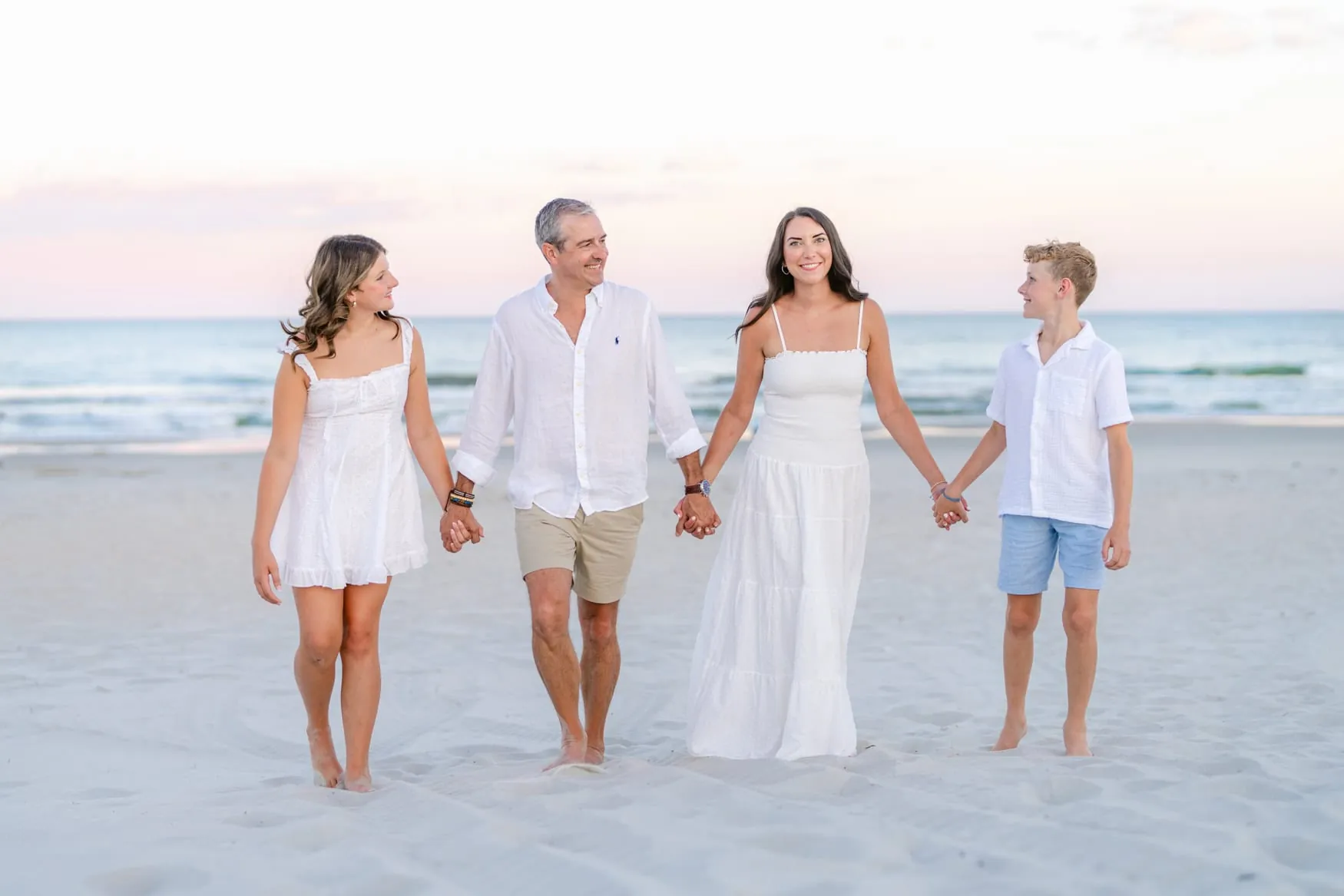
Let teenagers keep their identity inside the family palette. The fastest way to get a sullen teen in every frame is to force an outfit they would never choose. Give them the colors and let them pick the pieces.
If the palette is white, tan, and soft blue, a teen can choose the cut, the fit, and the style they actually feel good in. That ownership shows up as a relaxed expression instead of a forced one. Fit is where teens win or lose the look. Something too tight or too trendy pulls focus, while a clean, well-fitting piece in the right color always photographs better than the outfit they think is cool that week.
Comfort still matters at this age. A teen tugging at a neckline or squinting because they left sunglasses in the car checks out fast. Solve the small stuff before the session starts and you get their real personality on camera.
What Grandparents Should Wear for Beach Photos
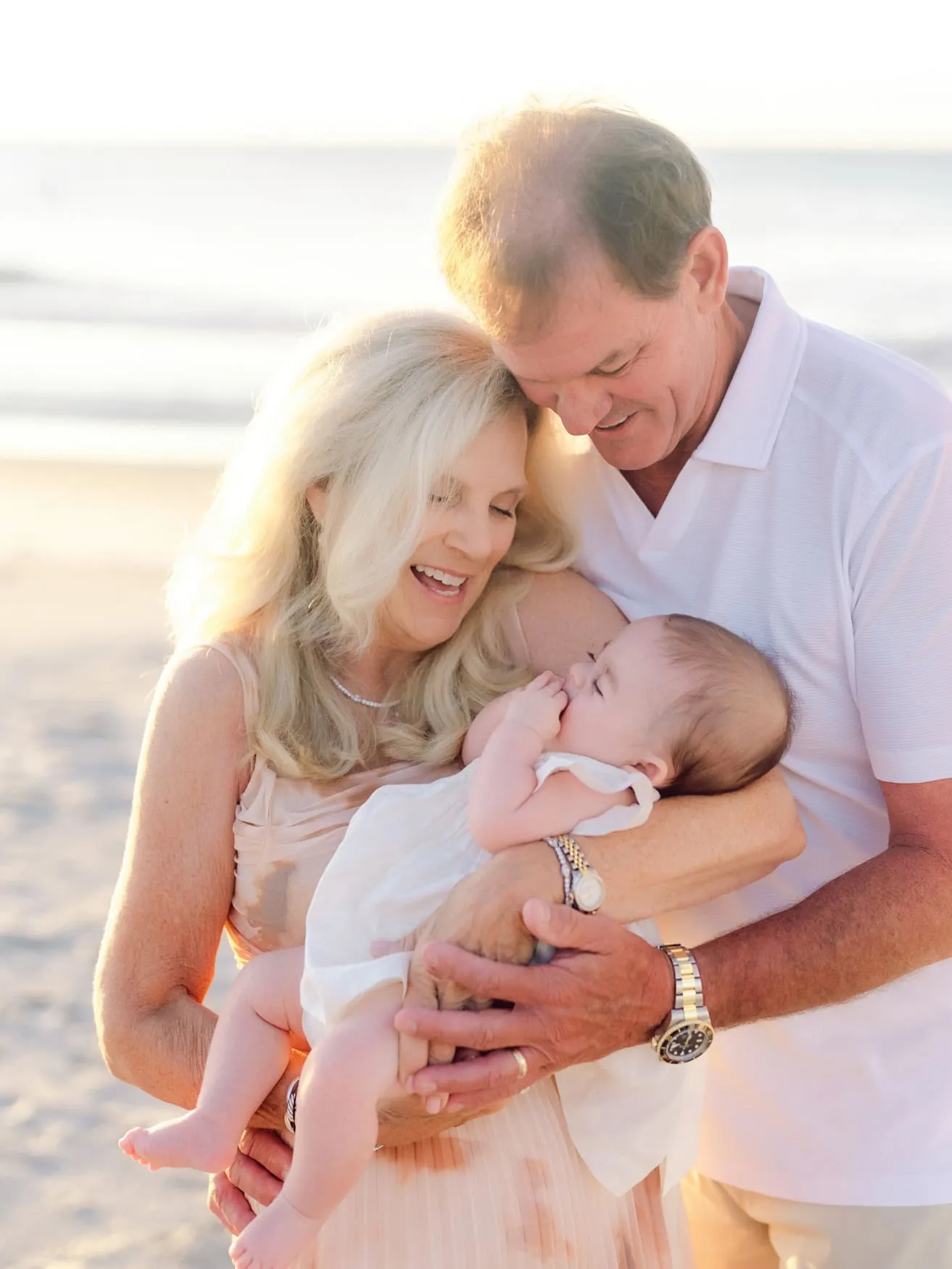
Grandparents should wear the family palette in cuts that feel comfortable and flattering to them. Comfort keeps them present and relaxed through a full session, which is exactly what you want in multigenerational photos.
Longer sleeves and lightweight layers photograph well and often feel better. A soft cardigan, a linen shirt with rolled sleeves, or a flowing top gives coverage without heat and adds texture to the group. Choose footwear they can actually walk in on sand. Bare feet look lovely in photos, but soft, uneven sand is hard on older knees and hips, so simple sandals they can slip off for a few frames are a smart compromise.
Keep grandparents in the same family of colors without matching them to the toddlers. A grandmother in soft white and a grandson in white linen clearly belong together without wearing the same thing.
Coordinating Extended Families and Large Groups
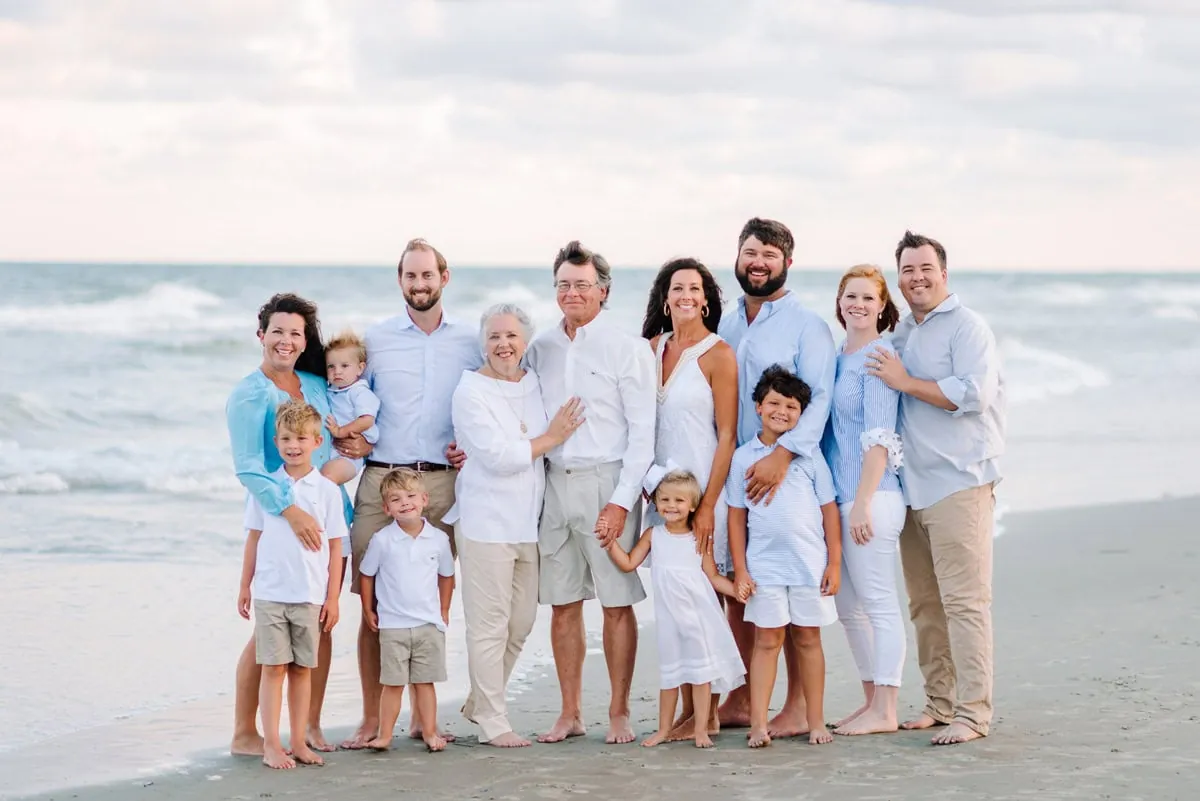
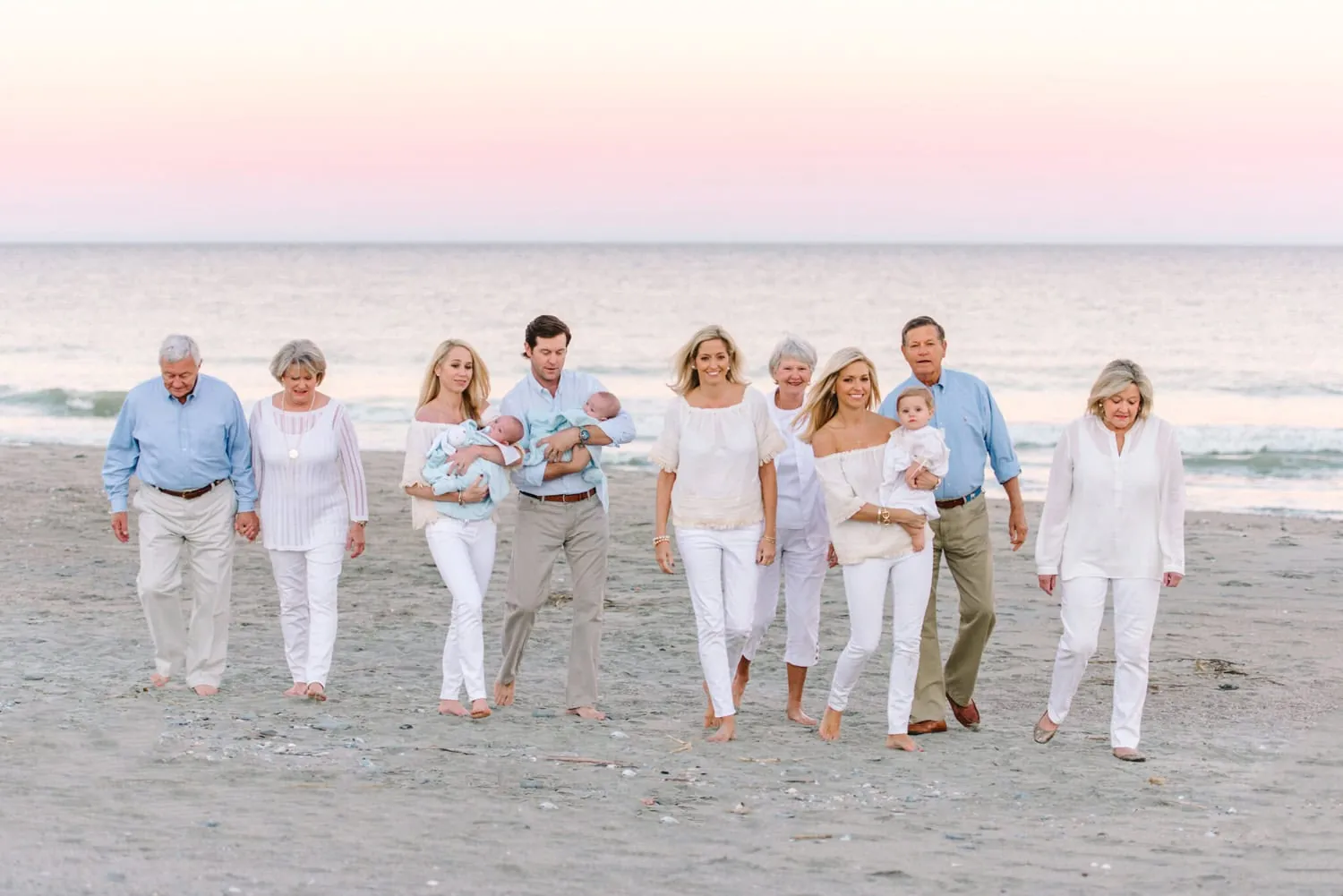
Large groups succeed on one palette held loosely across every household. When fifteen people share three colors, the group photographs as one family instead of several unrelated ones standing near each other.
Assign the palette by household, not by person. Give each family unit the same two or three colors and let them dress their own members. This keeps the coordination manageable and still reads unified in the final image. Spread your darkest and richest tones evenly through the group. If all the deeper colors clump on one side, the photograph tips and feels unbalanced, so scatter the anchors so the eye moves smoothly across everyone.
Send the palette early and be specific. Vague guidance like “beachy colors” returns neon, black, and logos every time. Share the exact colors, a few example pieces, and a short list of what to avoid, and the whole group shows up cohesive. We photograph large and multigenerational groups often. Our nine person family beach session and our multigenerational family session both show how a single palette holds a big group together.
Beach Family Photo Outfit Ideas by Family Size
Balance changes with group size, so plan the palette around how many people you are dressing. The same three colors distribute differently across three people than across seven.
Family of Three
A family of three has room for a little more contrast. Two people can share a neutral while the third carries the accent color, which keeps a small group from looking too plain. Put the richest tone on one parent and let the child and the other parent stay lighter.
Family of Four
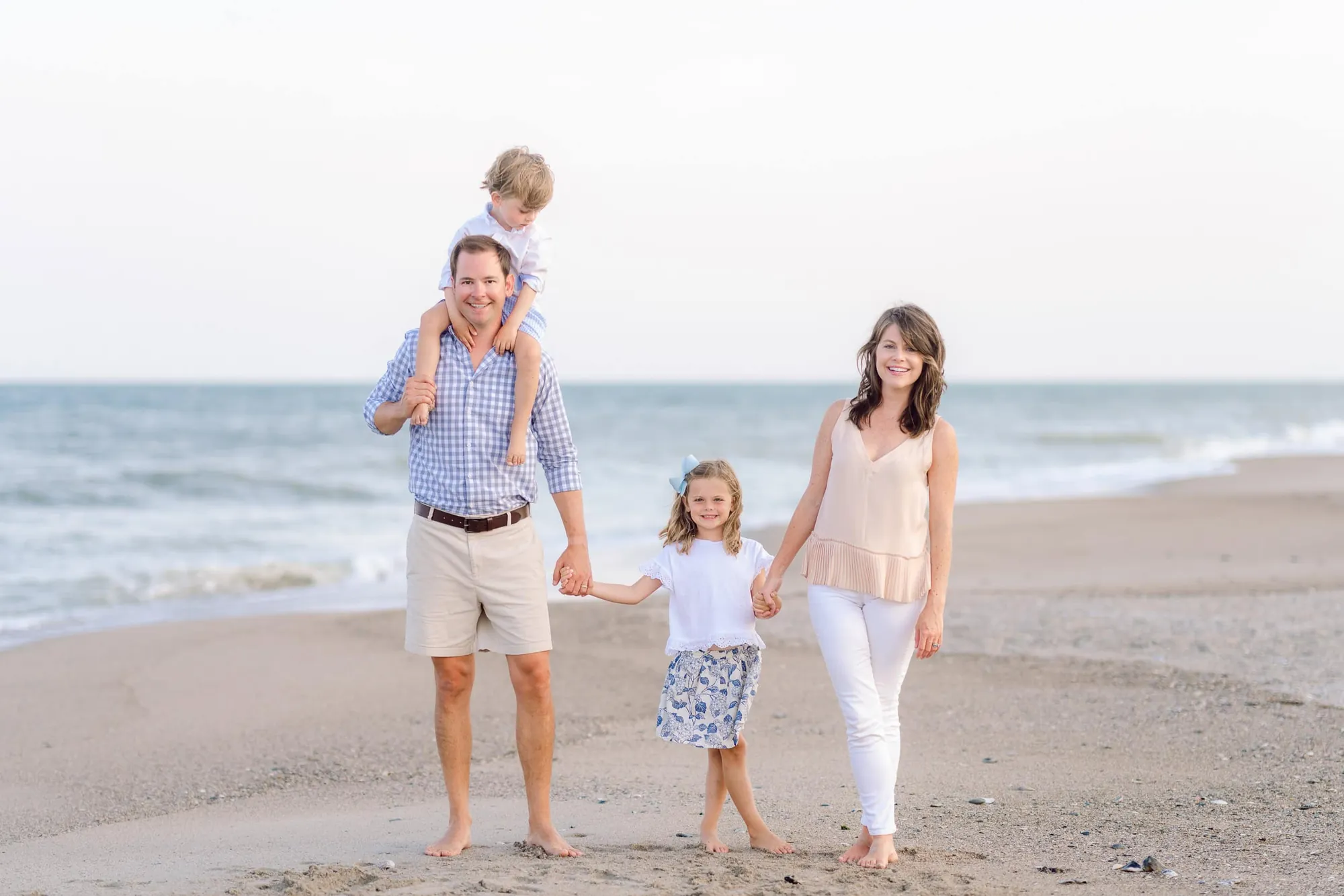
A family of four works best with two colors doubled and one shared neutral. Pair the colors diagonally across the group so the palette feels spread rather than split down the middle. Avoid dressing the two parents in one color and the two kids in another, which visually cuts the family in half.
Family of Five or More
Larger families need repetition to stay cohesive. Repeat each color on at least two people and lean on a strong shared neutral like white or cream to tie everyone together. The general rule holds firm here: the more people in the frame, the simpler the palette should be.
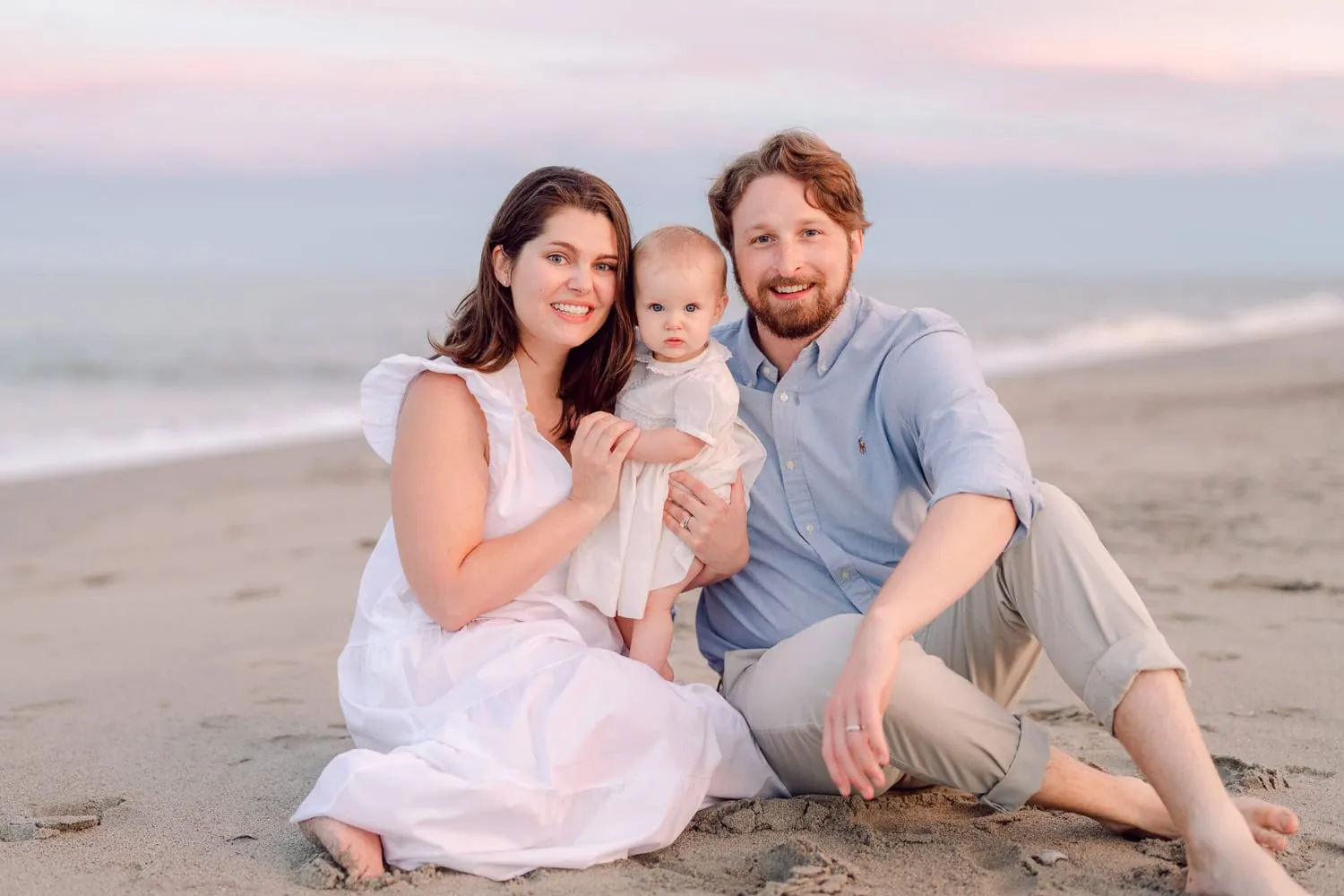
Best Fabrics for Beach Family Photos
Fabric decides how a beach photo feels as much as color does. Natural, lightweight fabrics move with the wind and read soft. Stiff synthetics fight the breeze and read cheap on camera.
Reach for these first:
- Linen for movement and natural texture
- Cotton for comfort and breathability
- Gauze and muslin for a soft, airy drape
- Chiffon for flow in dresses and skirts
- Fine knits for texture and warmth in cooler light
Avoid shiny and stiff fabrics. Polyester, satin, and anything with a plastic sheen catch harsh reflections in bright coastal light and look synthetic in photos. Heavily structured fabrics do not move, which kills the natural feeling that makes beach photos work. Comfort in coastal heat is not a small detail either. Breathable fabric keeps everyone cooler, cool people relax, and relaxed people photograph well.
Using Texture Instead of Bold Patterns
Texture gives a photograph depth that bold patterns cannot. A frame full of solid colors in different weaves reads rich and calm. A frame full of loud prints reads busy and pulls the eye off faces.
Build interest through weave and detail. Linen wrinkle, waffle knit, ribbing, eyelet, lace, crochet, and cable knit all add dimension while keeping the palette clean. Small, subtle patterns can work in moderation. A fine stripe, a soft gingham, or a delicate floral on one person adds a touch of interest. The trouble starts when several patterns compete in one group or a single loud print takes over the frame. When you are unsure, choose solids with texture. It is the most reliable way to look coordinated without looking flat.
Layering Without Overdoing It
One layer per person is the ceiling for beach photos. Layers add texture and hold up in cooler air, but too many turn a light coastal look heavy.
Good layers move. A soft cardigan, an open chambray or denim jacket, a light kimono, or a knit thrown over a dress adds depth and gives you options as the light and temperature shift through the session. Use layers to solve real problems. Early mornings and late evenings cool off fast on the water, and a single well-chosen layer keeps everyone comfortable without covering the palette. Keep the layer in the family colors, because a layer in an off tone becomes the loudest thing in the frame, which is the opposite of its job.
What Women and Girls Should Wear for Beach Sessions
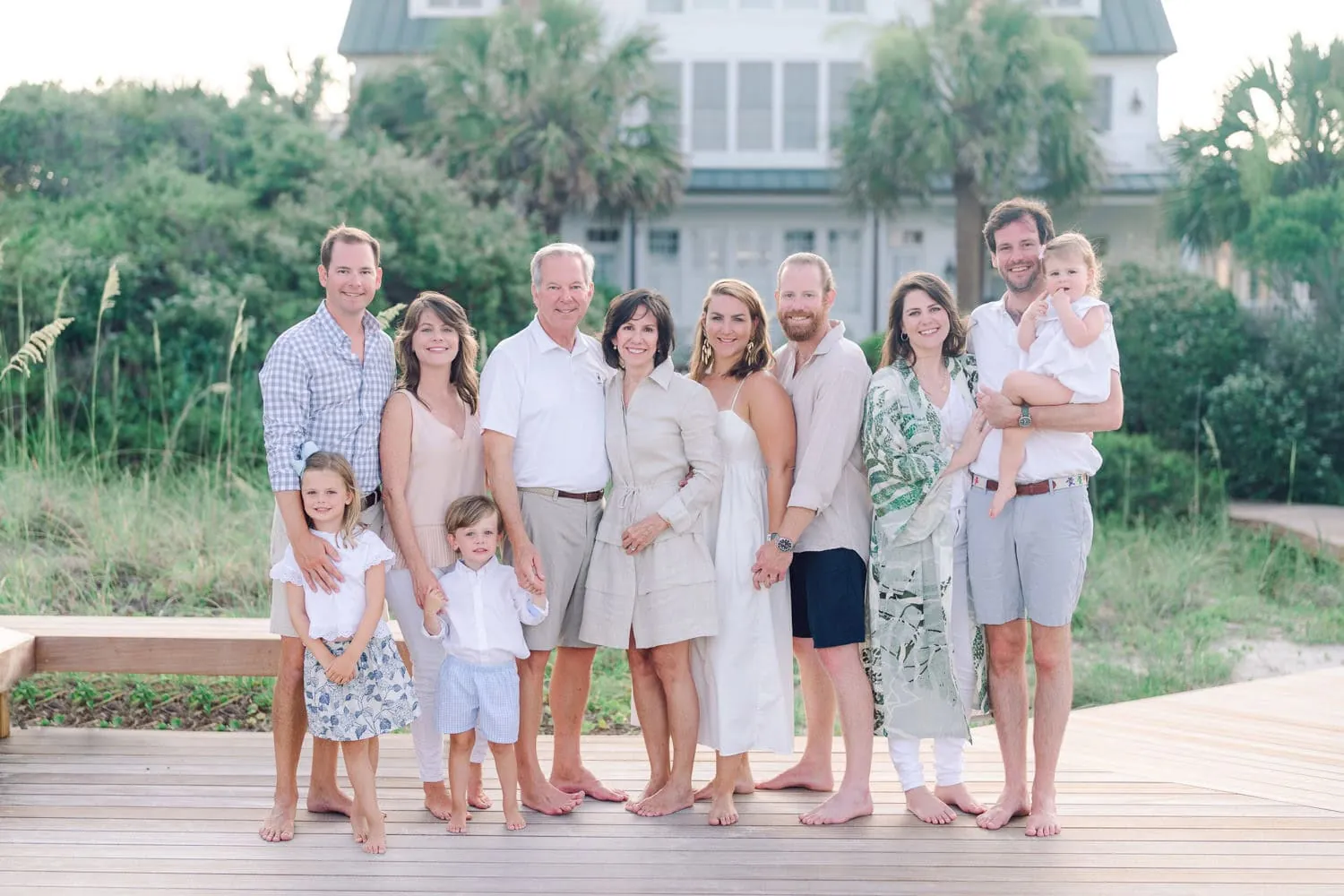
When choosing outfits for women and girls for beach family photos, movement and comfort matter most. Flowy, breathable fabrics photograph beautifully along the coast and help images feel natural rather than posed or stiff.
Best outfit choices for women and girls at beach sessions:
- Flowy maxi dresses or midi dresses
- Lightweight sundresses with subtle texture
- Soft skirts paired with neutral tops
- Simple rompers in breathable fabrics
Avoid stiff, structured clothing or anything overly tight. Pieces that move freely allow interactions, walking in the sand, and laughter to feel natural and unforced during your session. When women and girls feel comfortable and unrestricted, confidence comes through naturally, creating beach family photos that feel authentic, graceful, and timeless.
Start the whole family with Mom. She is usually the hardest to dress and the easiest to build a palette around, so choose her outfit first and pull two or three colors from it for everyone else. Favor length and movement over structure. A dress that moves in the wind photographs alive, while a stiff, fitted piece freezes. Maxi and midi lengths catch coastal breeze beautifully and flatter most body types.
Mind the practical fit too. A dress that needs constant adjusting will pull a mother out of every frame, so pick something she can walk in, sit in the sand in, and lift a toddler in without a second thought. For girls, comfort drives cooperation. A dress they like and can run in gives you real expressions, while one they are fussing with gives you a whole session of tugging.
Outfit Ideas for Men and Boys at Beach Sessions
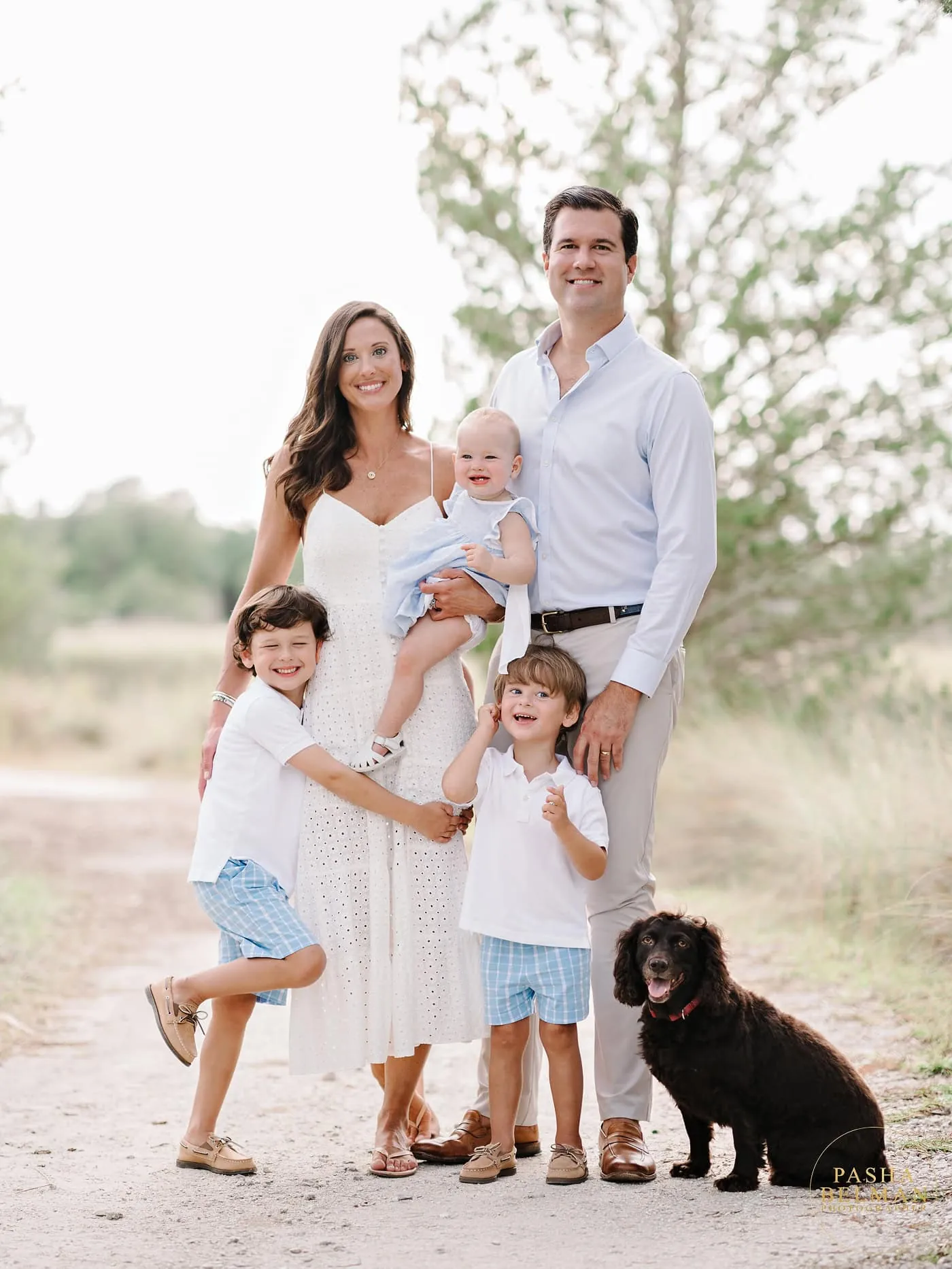
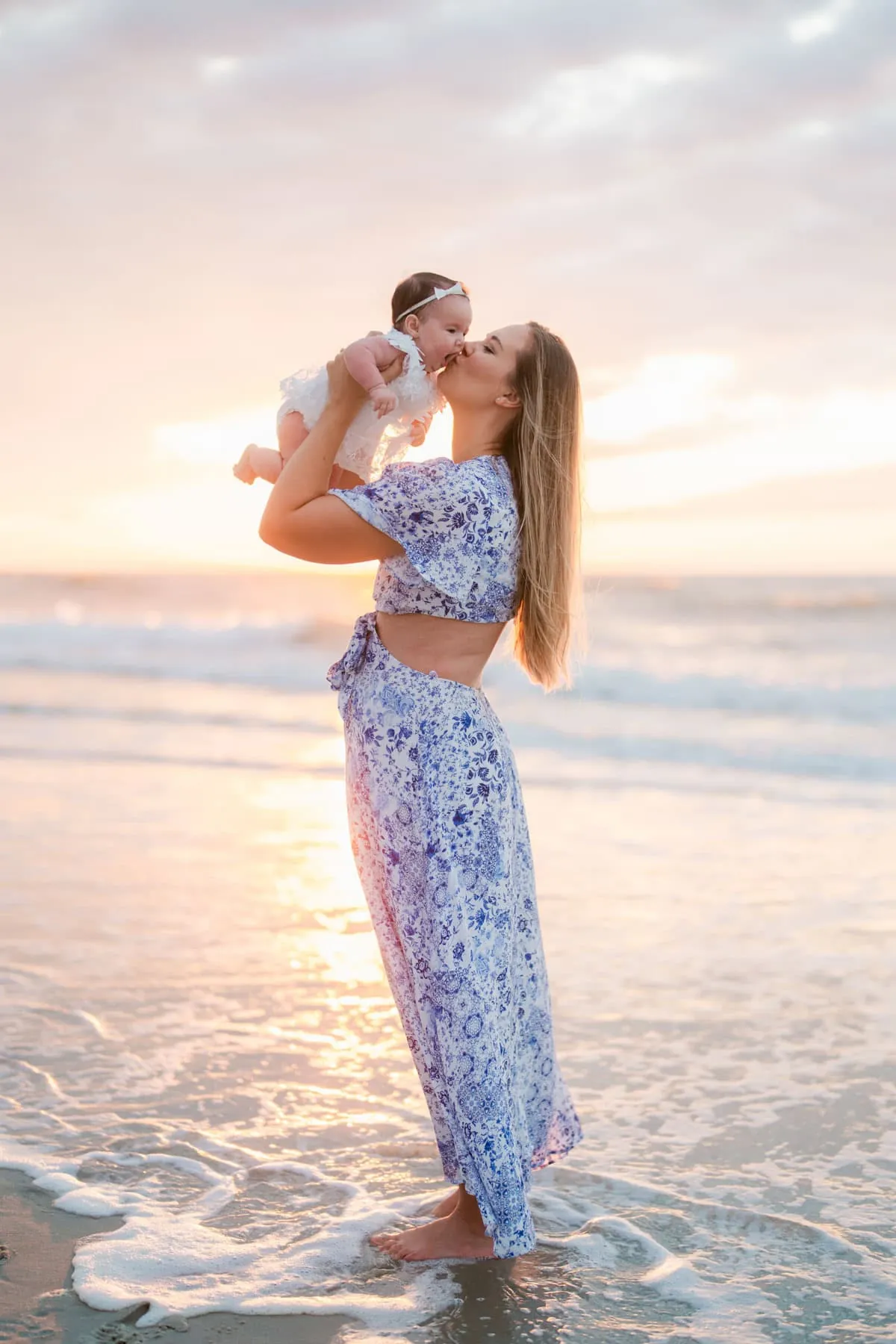
For men and boys, beach family photo outfits should feel clean, comfortable, and coordinated without looking formal. Lightweight fabrics and simple color choices help keep the focus on connection rather than clothing, especially important in coastal heat.
Best outfit choices for men and boys at beach sessions:
- Linen or cotton button-down shirts
- Lightweight polos in neutral or pastel tones
- Khaki, tan, or light neutral shorts or pants
- Rolled sleeves for a relaxed coastal feel
Shoes are optional for beach sessions. Barefoot often looks the most natural on the sand, but neutral sandals or slip-on shoes work well if footwear is needed. When men and boys are dressed comfortably and intentionally, beach family photos feel effortless, balanced, and timeless.
Build Dad around Mom. Once her outfit sets the palette, put him in one supporting color that ties to it. This is the fastest way to make a couple look intentional without matching. Fit matters more than the piece itself. A well-fitting plain shirt beats an expensive one that is too big or too tight, so roll the sleeves, keep the collar relaxed, and skip anything he would wear to an office.
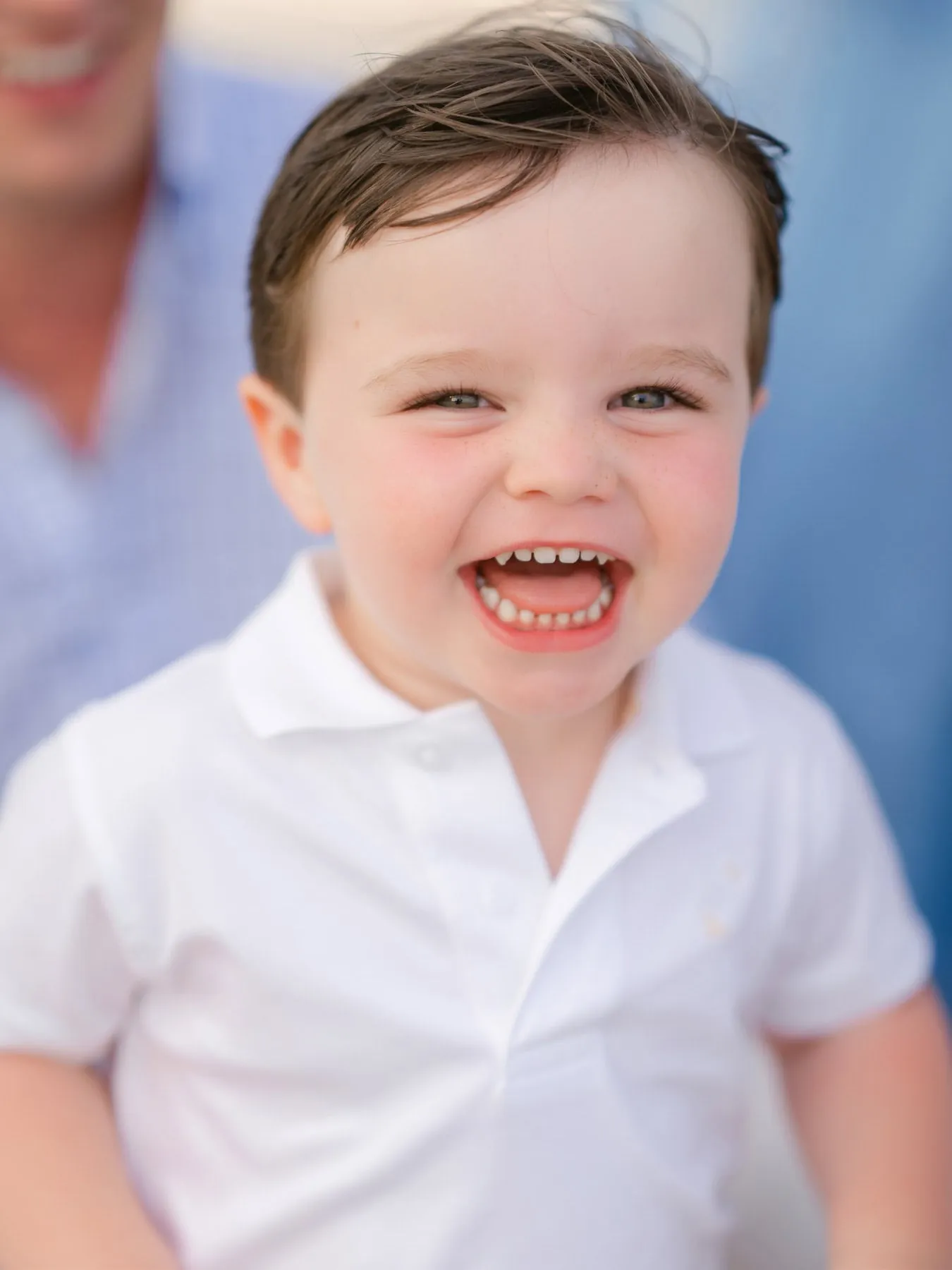
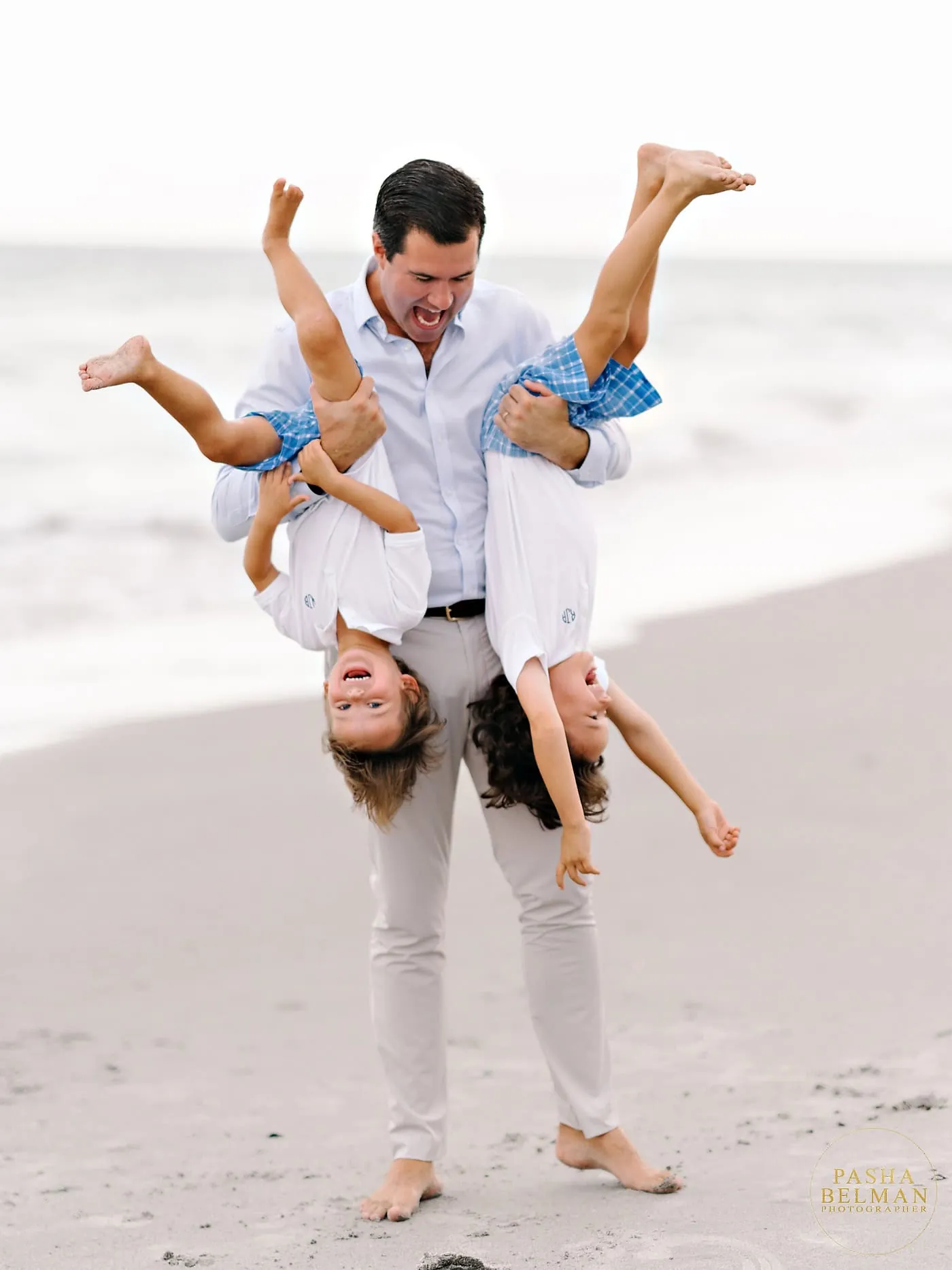
The most common issue with dads is stiffness, both in the clothes and the posture. Breathable linen and cotton help him stay cool and loose, which shows up as a more natural expression on camera. For boys, let them move. Shorts and a soft button-down or henley in the family palette handle sand, running, and climbing without looking sloppy.
Shoes or Barefoot for Beach Family Photos
Barefoot almost always wins on sand. Bare feet keep the frame clean, feel natural, and let kids move freely. It is the simplest way to make a beach photo look like it belongs on the beach.
Bring simple sandals for the walk and for anyone who needs them. Piers, rocks, hot sand, and long walks to the water are all easier with neutral sandals or slip-ons that come off quickly for barefoot frames. Skip sneakers, socks, and anything bulky, since they pull the eye straight to the feet and break the coastal feeling. If shoes must stay on, keep them neutral and simple. For small children, plan on bare feet and expect sandy toes. It is part of the look and part of the fun.
Jewelry and Accessories That Photograph Well
Keep jewelry small, simple, and natural. Delicate pieces add a finished touch, while heavy or shiny ones catch harsh light and pull focus off faces.
Choose thin necklaces, small studs, and simple bands over statement pieces. In bright coastal light, large metallic jewelry flares and dates a photograph quickly. Watch the accessories that sneak in without anyone thinking about them. Smartwatches, fitness bands, loud sunglasses, and logo hats all read as distractions on camera. A simple straw or neutral hat is the exception and can add to a beach look. Hair accessories should stay subtle as well. A soft ribbon or a simple clip is fine, while anything large or sparkly competes with faces.
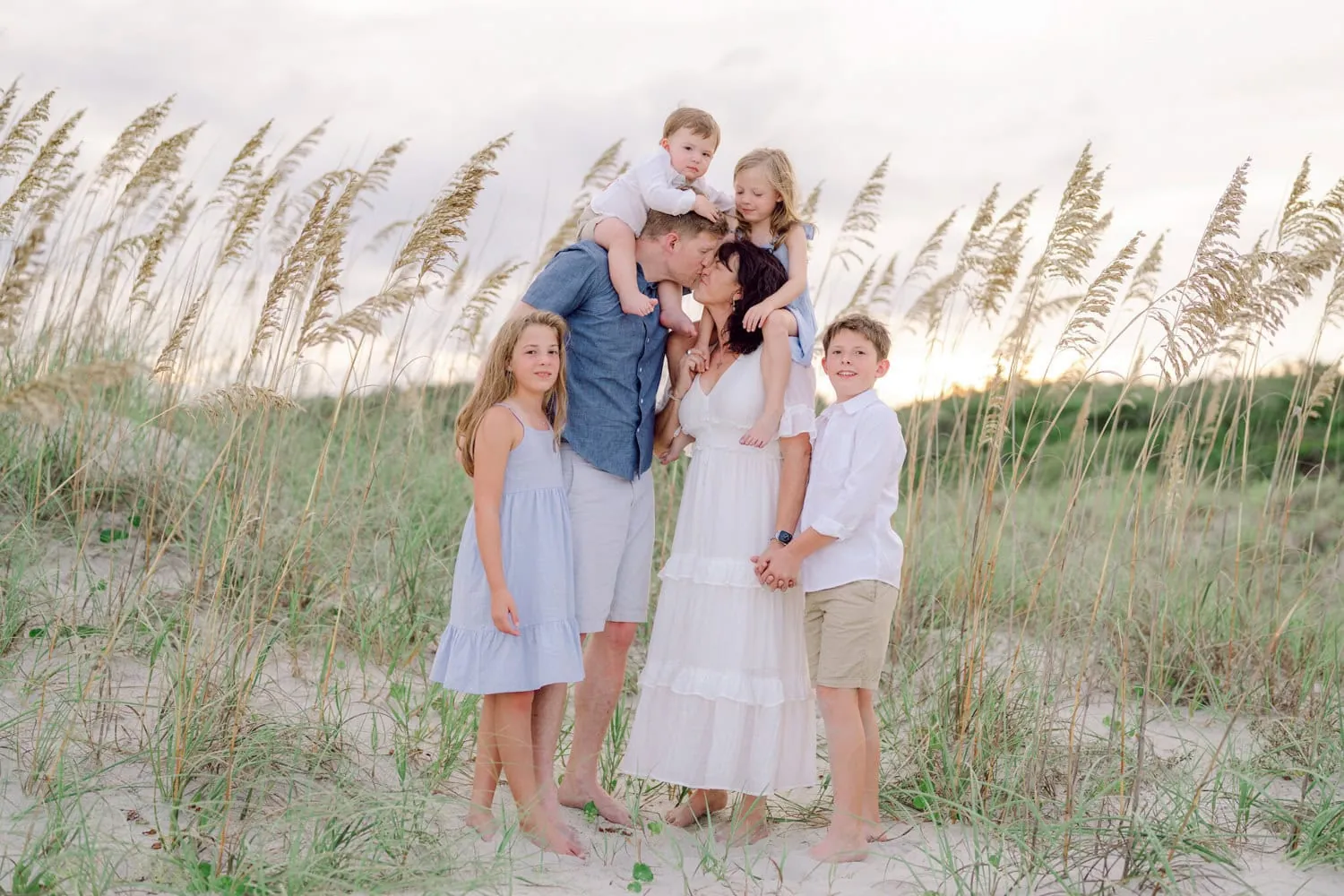
Wind and Hair: Planning for a Breezy Beach Session
Wind is part of every beach session, so plan for it instead of fighting it. Moving hair and fabric often make the most alive photographs of the day.
For fabric, weight matters. Very sheer, lightweight pieces fly dramatically, which can look beautiful or chaotic depending on the moment. If wind worries you, choose fabrics with a little more body that move gently instead of whipping. For hair, down and loose photographs soft and natural in a breeze. Stiff, heavily sprayed styles fall apart the moment the wind hits and look worse for the effort. A loose wave or a simple half style holds up best.
If you prefer hair up, commit to it fully. A secure low bun or braid beats a half-up style that the wind keeps pulling loose, so bring a few extra pins and a soft hair tie for quick fixes. Keep a small brush on hand and let go of perfection. Some of the most loved frames from any windy session are the ones where hair is moving.
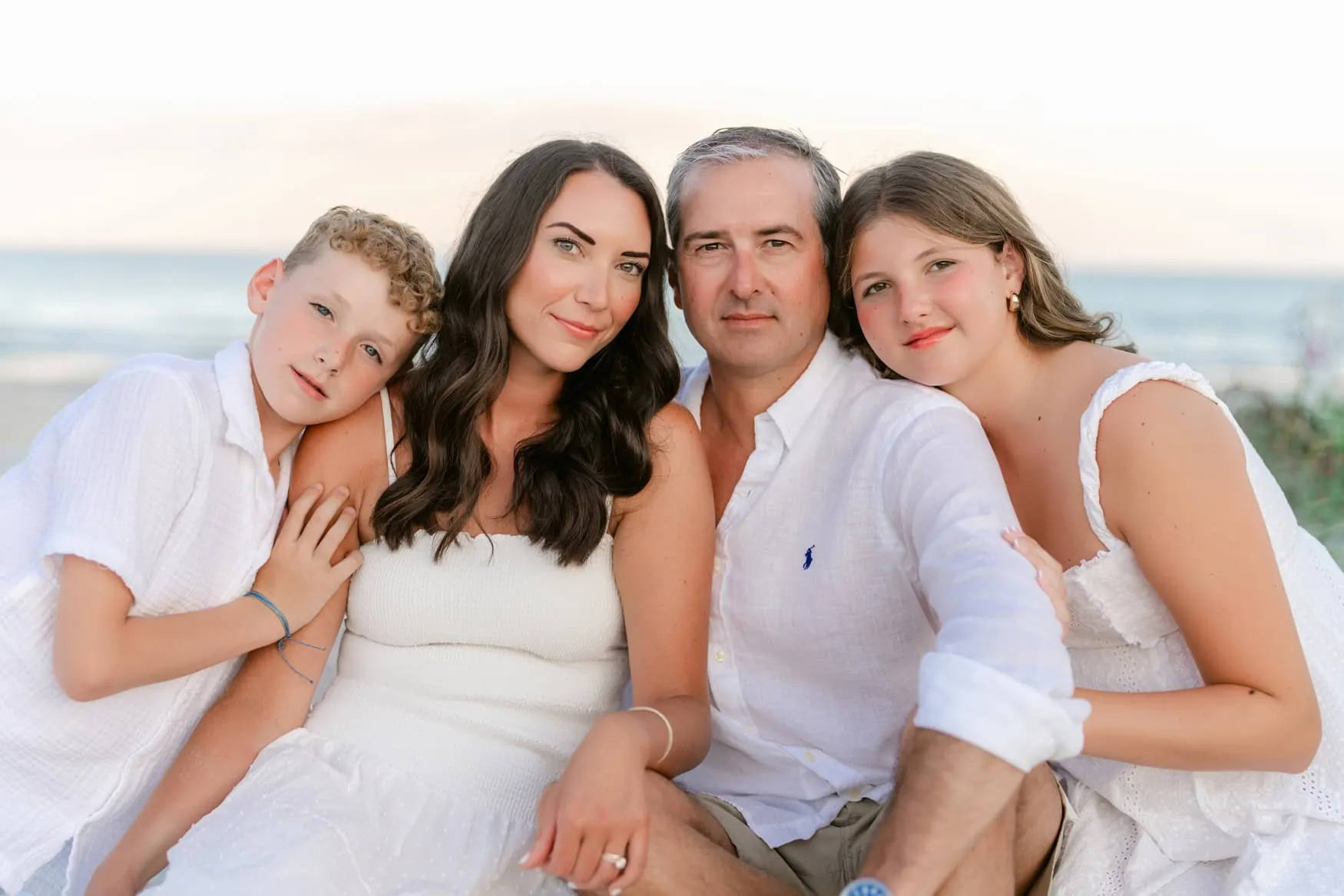
How Beach Light Changes Your Outfits: Sunrise vs Sunset
Light decides how your colors read, so plan outfits around the time of day. The same palette looks different at sunrise, at sunset, and under midday sun.
Sunrise light is soft, cool, and even. Pastels, whites, and light neutrals look their cleanest in it, and skin tones stay balanced. It is the gentlest light of the day for photographs and the easiest palette to dress for. Sunset light runs warm and golden. It deepens tans, blushes, and earth tones and gives everyone a soft glow. Cooler palettes like blue and white still work at sunset, but warm neutrals truly come alive in that last hour.
Midday sun is the hardest light on the beach. It is bright and harsh, which is why we schedule most sessions for the edges of the day. If you do photograph midday, avoid bright optic white, which blows out, and lean toward soft mid tones that hold detail. Plan your session time around good light. Our sunset calendar and our guide to sunrise beach sessions can help you pick the right window.
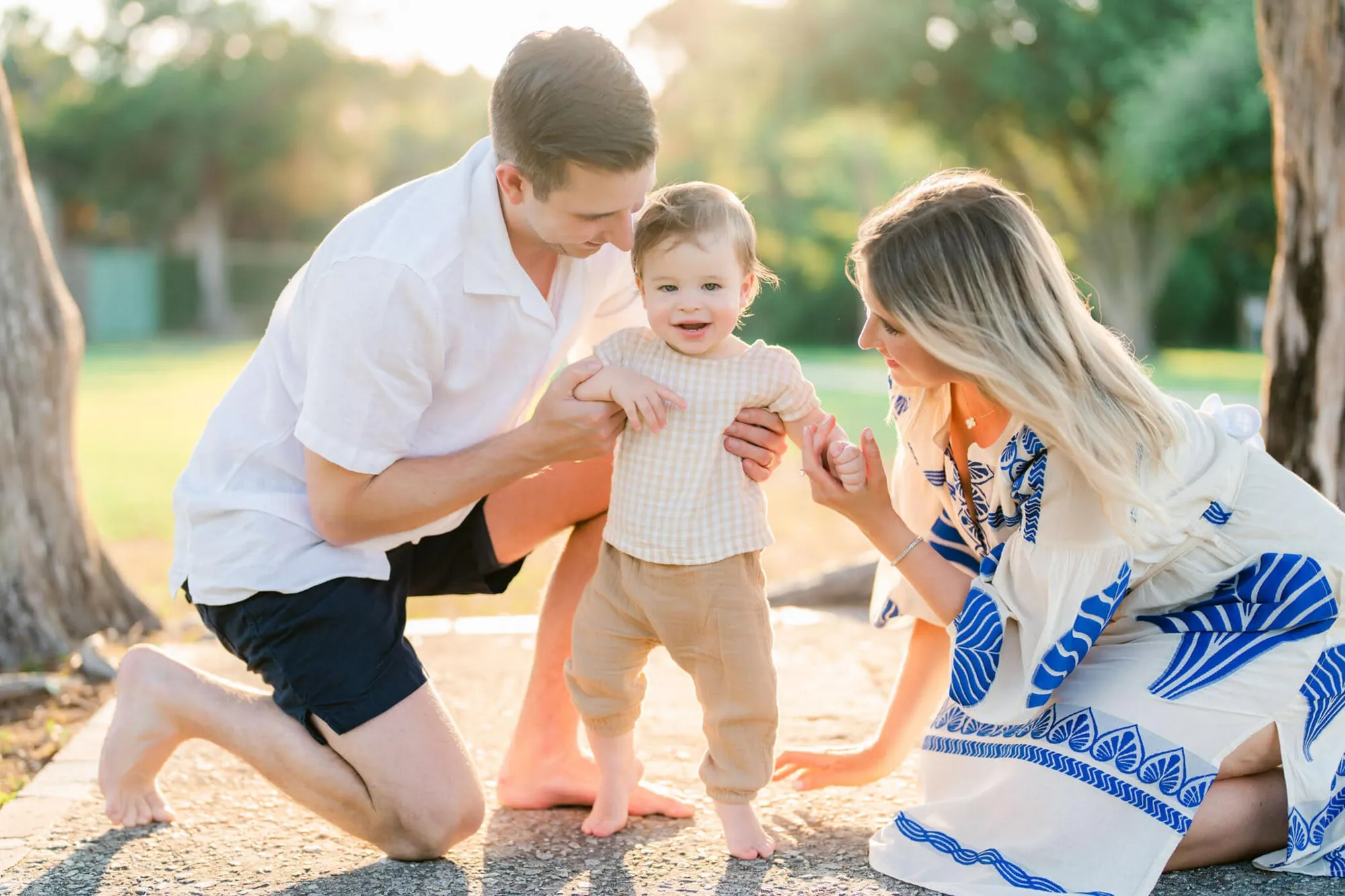
Seasonal Beach Outfit Planning
Season shifts the palette and the fabric weight, even at the beach. Warm months call for the lightest, airiest pieces. Cooler months open the door to richer tones and soft layers.
In warm weather, prioritize breathability. Linen, gauze, and light cotton keep everyone cool and photograph soft, and lighter neutrals and pastels reflect the bright, open light. In cooler weather, reach for depth. Muted earth tones like olive, rust, warm terracotta, camel, and soft burgundy suit lower, warmer light, and a knit or light layer adds both warmth and texture. Keep the tones muted so the look stays coastal instead of heavy. Whatever the season, the core rules hold: coordinate a small palette, choose natural fabrics, and keep everyone comfortable enough to relax.
Beach Family Photo Packing Checklist
A short packing list keeps a session smooth and gives you options if something goes sideways. Pack it the night before so the morning stays calm.
- Every outfit laid out and steamed or ironed the night before
- A backup outfit for each young child in matching colors
- Simple sandals or slip-ons for the walk to the sand
- A small brush, a few hair pins, and a soft hair tie
- Water and a light snack for the kids
- Baby wipes and a towel for sandy hands and feet
- Sunscreen applied early and rubbed in fully so it leaves no sheen
- Any small props you plan to use, kept minimal
The Last Minute Check Before You Leave the Car
- Tags removed and price stickers off shoes
- Bra straps and undergarments adjusted so nothing shows
- Hair ties off wrists and out of the frame
- Phones and keys out of pockets
- A quick bathroom stop for everyone, especially the kids
Common Outfit Mistakes to Avoid
A few repeat mistakes cost families the cohesive look they wanted. Each one is easy to avoid once you know to watch for it.
- Everyone matching in identical outfits, which reads as a uniform instead of a family
- Using only one color across the whole group, which flattens the frame
- Loud logos, graphics, and cartoon characters that pull the eye off faces
- Neon and highly saturated brights that reflect onto skin and fight the beach
- Stiff, structured, or overly formal clothing that cannot move in the wind
- Shiny synthetic fabrics that catch harsh reflections in coastal light
- Bulky sneakers and socks that anchor the eye to the feet
- Too many competing patterns within one group
One thing that is not on this list is all-white. Styled with mixed fabrics and texture, all-white is one of the strongest beach palettes there is. The mistake is five identical flat tees, never the color itself.
Frequently Forgotten Details
The small details separate a good beach session from a great one, and they are the easiest things to forget in the rush out the door.
- Wrinkles. Steam or iron every outfit the night before, since linen especially creases in a bag.
- Undergarments. Check bra straps, lines, and colors under lighter fabrics before you leave.
- Nails. Chipped or bright, clashing polish shows up in close and hand-in-hand frames.
- Sunscreen sheen. Apply it early and rub it in fully so faces do not shine.
- Pockets. Phones, keys, and wallets create bulges, so empty them.
- Hair ties. Keep them off wrists, since they show in almost every posed frame.
- Kid basics. A snack, a bathroom stop, and a few minutes to explore the sand buy you real smiles.
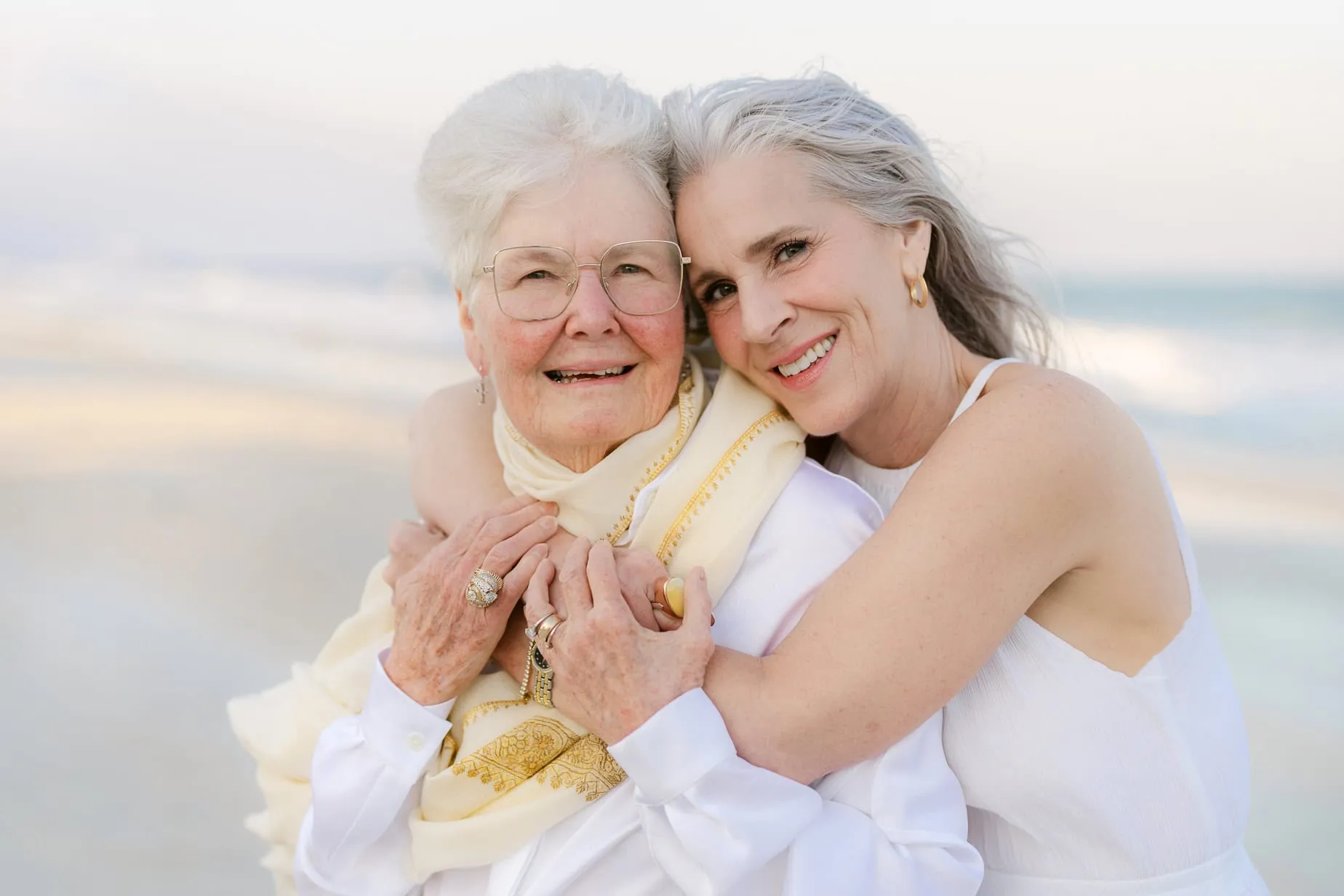
Top Tips for Planning Your Beach Family Photo Outfits
Choosing the right outfits for beach family photos doesn’t need to feel overwhelming. A few simple guidelines can help your photos look cohesive, natural, and timeless while keeping everyone comfortable.
1. Coordinate, don’t match
Instead of dressing everyone in identical outfits, choose two or three colors and coordinate them across the family. This approach creates visual balance while allowing each person’s personality to show naturally, especially important for outdoor beach sessions where the backdrop is part of the portrait.
2. Avoid logos and distracting patterns
Large logos, bold graphics, and busy prints can pull attention away from faces and expressions. Solid colors and subtle textures photograph best and keep the focus on connection during your session.
3. Choose classic styles over trends
Timeless clothing ages better than trendy pieces. Neutral tones and simple silhouettes help ensure your beach family photos still feel beautiful years from now.
4. Dress for the beach environment
Beach environments are bright and reflective, so breathable fabrics and light layers work best in coastal heat. Clothing should move easily in ocean breezes and feel comfortable for walking in sand and interacting naturally.
5. Use layers and accessories sparingly
Light layers like cardigans or denim jackets add texture without overpowering outfits. Accessories should stay minimal and natural to avoid distraction from the beautiful beach backdrop.
Frequently Asked Questions About What to Wear for Beach Family Photos
What are the best colors to wear for beach family photos?
Soft neutrals and light pastels photograph best. Colors like white, cream, blush, light blue, soft gray, and pale tan complement beach backdrops while keeping the focus on connection rather than clothing.
Should everyone in the family wear matching outfits for beach photos?
Matching outfits are not necessary. Coordinating a color palette of two or three tones creates a cohesive look while allowing each family member’s style to show naturally during your session.
How many colors should our family wear?
Two or three colors works for almost every family. Pick a main color, a supporting neutral, and one accent, then make sure each color appears on at least two people. One color reads flat, and four or more starts to compete with the beach.
What should moms wear for beach family photos?
Flowy dresses, skirts, or lightweight fabrics in soft neutrals or pastels work best. Comfortable clothing allows natural movement and relaxed expressions during your session. Choose Mom’s outfit first and build the rest of the family around it.
What should dads wear for beach family photos?
Button-down shirts or polos in white, tan, light blue, or soft gray paired with lightweight shorts or pants photograph well. Breathable fabrics help maintain a relaxed look in coastal heat. Fit matters more than the specific piece.
What should kids wear for beach family photos?
Simple, comfortable outfits in coordinated colors work best for children. Avoid large logos or bold prints that can distract from expressions and interaction during the session.
What should babies and toddlers wear for beach photos?
Soft, natural fibers in the family palette work best, like a simple linen or cotton romper or a knit onesie. Skip stiff, fussy outfits and hard shoes, keep them barefoot, and bring a backup outfit in the same colors in case of sand and spills.
What should teenagers wear for beach photos?
Give teenagers the family palette and let them choose the pieces. Ownership of the outfit gives you a more relaxed expression. Focus on clean fit in the right colors rather than forcing a specific style.
What should grandparents wear for beach family photos?
Grandparents look best in the family colors in comfortable, flattering cuts. Longer sleeves and light layers photograph well and feel better, and simple sandals they can slip off make walking on soft sand easier.
How do we coordinate a large or extended family?
Anchor the whole group to one palette of two or three colors and assign it by household. Spread the darker, richer tones evenly through the group instead of clustering them, and send everyone the exact colors and examples well ahead of the session.
Are all-white outfits a good choice for beach family photos?
Yes. All-white outfits are a timeless option that reflect natural light beautifully and create a clean, cohesive look. Adding texture through fabric helps keep the look visually interesting. Mixing linen, cotton gauze, eyelet, and knits is what makes all-white feel intentional.
What fabrics look best in beach family photos?
Lightweight, breathable fabrics like linen, cotton, chiffon, or soft blends photograph beautifully and move naturally in ocean breezes.
What colors should be avoided for beach photos?
Avoid neon colors, black, and overly bright hues. These tones can reflect harshly on skin and distract from the natural coastal setting.
Does the time of day change what we should wear?
Yes. Sunrise light is soft and cool and flatters pastels, whites, and light neutrals. Sunset light is warm and golden and deepens tans, blushes, and earth tones. Under harsh midday sun, avoid bright optic white and choose soft mid tones that hold detail.
What should we do about wind on the beach?
Plan for it. Choose fabrics with a little body if you want less drama, keep hair down and loose or fully secured in a low bun or braid, and bring a small brush and a few pins. Moving hair and fabric often make the best frames of the session.
What should I wear for fall beach family photos?
Fall sessions photograph best in warm, muted tones like olive, rust, mustard, or soft burgundy. Light layering adds texture and seasonal depth while keeping the look coastal.
Can we wear jeans for beach family photos?
Yes, lightweight or soft denim works well when paired with light tops. Rolled cuffs and barefoot styling keep the look relaxed and coastal.
What shoes work best for beach family photos?
Barefoot is ideal for beach photos. If shoes are needed, neutral sandals or simple slip-ons blend best with the sand and coastal environment.
How far in advance should we plan our outfits?
Plan at least a week or two ahead so there is time to order, try on, and swap pieces. Start with one person, build the palette around them, and lay everything out together before the session so the final look is coordinated rather than assembled the morning of.
Ready to Book Your Beach Family Session?
Pasha Belman Photography brings over 15 years of experience photographing families in coastal settings. With 250+ five-star reviews and work featured in major publications, we specialize in creating timeless, natural beach family portraits. Once you book, we’ll send you our full wardrobe guide so your family arrives confident, coordinated, and ready for beautiful photos.
Explore family photography options and book your session here.
Vacationing on Kiawah Island? The outfit recommendations in this guide work beautifully there too. For location ideas, planning advice, and real session examples, visit my Kiawah Island Family Photographer guide.
Planning your own session? Meet the Myrtle Beach family photographers, see our senior pictures, or send an inquiry.